
Category: Guide

  • Compliance Checklist for Importing Magnets from China: Documents, HS Codes and Tests

    Compliance Checklist for Importing Magnets from China: Documents, HS Codes and Tests

    Importing magnets is not a price-and-lead-time exercise. A magnet shipment crosses two separate classification systems, needs a document pack that most suppliers assemble only partially, and — if it flies — has to satisfy dangerous-goods rules that have nothing to do with export control at all.

    This is the checklist we use ourselves, in the order the questions actually come up. It assumes you already know whether your part is controlled; if that is still open, settle it first with our guide to the Dy/Tb classification test.

    Two Classification Systems You Must Not Confuse

    Almost every problem we see in magnet importing starts with these two being treated as one thing.

    HS / tariff codeDual-use export control code
    What it is forDuty calculation, trade statistics, customs proceduresExport control — whether the goods may leave China, and under what authorisation
    Who sets itWorld Customs Organization, plus national tariff linesChina’s dual-use export control catalogue (MOFCOM / GACC)
    Typical example8505.11 — permanent magnets of metal1C905 — NdFeB containing dysprosium
    Who needs itEvery import, alwaysOnly shipments of controlled items
    Format6 digits internationally, more nationallyAlphanumeric control code

    A sintered NdFeB magnet containing dysprosium is, for example, both HS 8505.11 and control code 1C905. The HS code tells the destination country what duty applies. The control code tells Chinese customs whether the shipment may move at all. Getting one right and the other wrong does not average out — the shipment stops.

    HS Codes Commonly Used for Magnets

    ProductHS subheadingNotes
    Sintered NdFeB permanent magnet8505.11 — of metalIncludes unmagnetised blanks that already have the essential character of a magnet
    Sintered SmCo magnet8505.11 — of metalSame subheading as NdFeB
    Cast AlNiCo magnet8505.11 — of metal
    Ferrite / ceramic magnet8505.19 — other than of metal
    Bonded, flexible or rubber magnet8505.19 — other than of metalThe binder determines the subheading, not the magnetic powder
    Electromagnetic coupling, clutch or brake8505.20Permanent-magnet couplings vary by national tariff line
    Electromagnets, work holders and parts8505.90

    Three cautions worth more than the table itself.

    The first six digits are international; everything after that is national. The United States, for example, splits its tariff further — 8505.11.00.70 is the line for sintered neodymium-iron-boron. Your broker, not your supplier, is the authority on the destination line.

    Classification follows the material, not the trade name. “Bonded magnet” made from NdFeB powder in a polymer binder is 8505.19, not 8505.11, because the article is not of metal. This trips up buyers who assume the rare-earth content settles it.

    We deliberately do not publish duty rates. Tariff treatment of Chinese-origin magnets, and the trade measures layered on top of it, have changed repeatedly in recent years and differ by destination and by product line. Confirm the current rate with your broker before you quote a landed cost — a rate printed in an article is out of date the moment it is published.

    The Document Pack

    DocumentIssued byWhat it must showHow it usually fails
    Commercial invoiceSupplierSpecific product description, grade, dimensions, coating, unit price, HS code, country of originGeneric descriptions such as “magnet” or “hardware”
    Packing listSupplierPackage count, gross and net weight, dimensionsNet weight of the magnets missing — needed for dangerous-goods declarations
    Bill of lading / air waybillCarrierConsignee and description consistent with the invoiceShipper or consignee mismatch after a late change
    Certificate of originChamber of commerce / CCPITOrigin, for preferential treatment or trade measuresRequested at the last minute, delaying shipment
    Composition test report (Dy/Tb)Accredited laboratoryMethod, limit of detection, measured values, lot identificationNot lot-specific; a report from a different batch will not match a sampled consignment
    Control classification statementSupplierStates the applicable catalogue code, or that the item is not controlled, referencing the test reportAn assertion with no test behind it
    Export licence (controlled items only)MOFCOMCovers the specific item, quantity and consigneeApplied for late; specification changed after filing
    Magnetic flux test reportTesting providerField strength at 2.1 m and 4.6 m from the packageMeasured before final packing, so invalid after repacking
    RoHS / REACH declarationsSupplier or laboratorySubstance compliance for the destination marketAssumed to be automatic; not actually requested

    If you are assembling this pack for the first time, our free Magnet Export Compliance Checklist (PDF) has the same list in a form you can forward to your own compliance or logistics team.

    The Composition Test Report: Five Things It Must Contain

    A report that says “no dysprosium detected” is not sufficient. For the classification to be defensible at the port and in an audit, the report needs all five of the following:

    1. Sample identification traceable to the production lot or batch — a report that cannot be tied to the goods in the container proves nothing
    2. The test method — ICP-OES for quantitative measurement; handheld XRF for screening only
    3. The limit of detection for dysprosium and terbium under that method
    4. Measured values stated numerically — not just a pass/fail statement
    5. Laboratory accreditation — CMA or CNAS in China, or an equivalent accredited body

    Our own composition testing is carried out at a customs-affiliated testing centre in Ningbo, with the report issued as part of the shipment documentation rather than kept on file. That single practice resolves more port queries than any other.

    How to Describe the Goods

    This is the highest-value paragraph in the article, because a careless description is the most common cause of penalties in this category — not concealment.

    Be specific. Material, grade, dimensions, coating, magnetisation state and application belong in the description. “Sintered NdFeB magnet, N42SH, NiCuNi coated, 40 x 20 x 5 mm, for brushless DC motor” survives an audit. “NdFeB magnet” invites one.

    Never use catch-all descriptions. “Hardware”, “mechanical parts” and “metal components” tell customs nothing about the item, and in a controlled-items environment that is treated as an inaccurate declaration regardless of intent.

    Never mix controlled and uncontrolled items on one line. If a consignment contains both Dy-bearing and HRE-free parts, declare them separately and specifically. Combining them under one general description exposes the entire shipment.

    Keep the invoice, the declaration and the technical description consistent. A specification that says 120 °C on one document and 180 °C on another raises exactly the question you do not want raised.

    Air Freight: UN2807 Is a Separate Gate

    Magnetized material is regulated for transport independently of export control. Under the IATA dangerous-goods rules for UN2807, a consignment is only acceptable for air freight if its magnetic field is below 0.002 gauss measured at 2.1 m, or 0.00525 gauss measured at 4.6 m, from the package surface.

    In practice this means:

    • Strong magnets will need shielding — typically a ferromagnetic enclosure — to bring the field under the limit
    • The measurement must be taken on the final packed configuration. Repacking invalidates the test
    • Airlines reject on the flux measurement, not on the paperwork. A perfect invoice does not get a shielded pallet onto an aircraft
    • Sea freight avoids the flux limit, but some carriers still request a declaration for strong magnets

    Where the schedule allows, shipping by sea is usually simpler and cheaper for dense magnet cargo. Where it does not, plan the shielding and the flux test into the packing stage rather than discovering the problem at the freight forwarder’s warehouse.
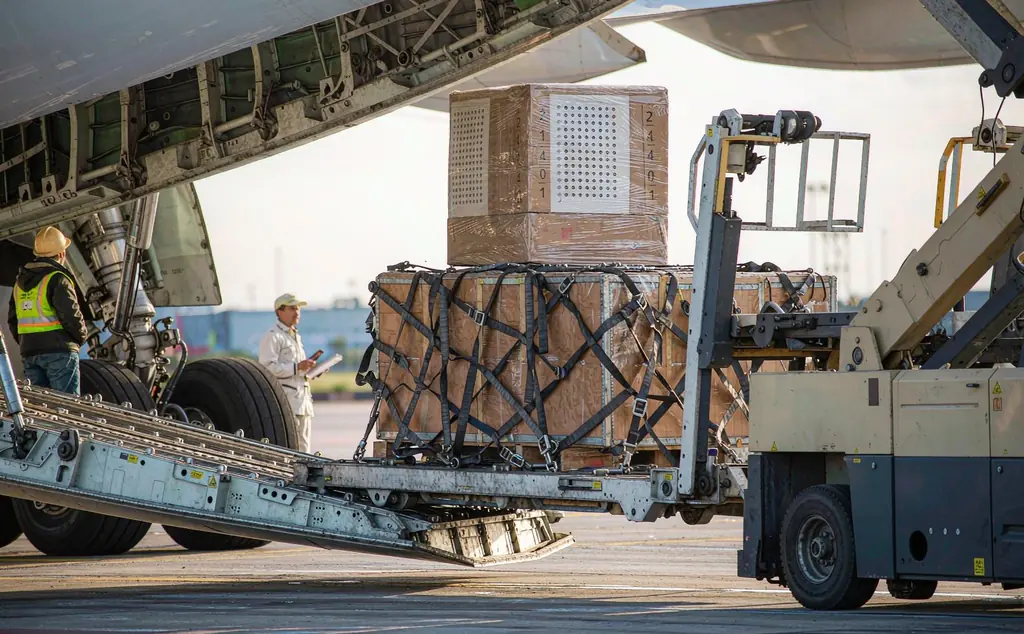
    Magnet cartons loaded onto an air freight aircraft under UN2807 magnetized material rules

    Five Red Flags in a Supplier’s Paperwork

    1. “No licence needed” with no test report. A verbal classification is not a classification. Ask for the report or assume the goods are controlled.

    2. The composition is described by grade name. “SH, so it’s fine” is exactly the reasoning that fails when the producer uses terbium-based grain boundary diffusion.

    3. A test report without a method or a detection limit. Without those two fields, “not detected” is unverifiable — and unverifiable means indefensible.

    4. A vague invoice description. If you cannot tell from the invoice what is in the box, neither can a customs officer.

    5. Pressure to ship before the documents are ready. Release from port is not the end of the process: customs retains post-release audit authority for three years in China, and several published penalty decisions concern shipments that had already left the country. Urgency is a commercial pressure, not a legal defence.

    Pre-Shipment Checklist

    • ☐ Composition of the actual production lot confirmed by accredited laboratory
    • ☐ Dy and Tb measured numerically, with method and detection limit stated
    • ☐ Test report tied to the lot or batch identification on the packing list
    • ☐ Written control classification statement obtained from the supplier
    • ☐ Export licence obtained and matching the item, quantity and consignee (controlled items)
    • ☐ Commercial invoice description specific: material, grade, dimensions, coating, application
    • ☐ Controlled and uncontrolled items declared separately
    • ☐ HS code confirmed with the destination broker, including national tariff line
    • ☐ Certificate of origin requested
    • ☐ Magnetic flux measured on the final packed configuration, at 2.1 m and 4.6 m
    • ☐ Shielding applied and re-tested if the configuration changed
    • ☐ Destination-market substance declarations (RoHS / REACH) on file

    Frequently Asked Questions

    Do I need the dual-use control code, or is the HS code enough? You need both, for different purposes. The HS code governs duty and statistics; the control code governs whether the goods may be exported from China. A controlled NdFeB magnet carries both — for example HS 8505.11 and control code 1C905.

    Is HS 8505.11 correct for both NdFeB and SmCo magnets? At the six-digit level, yes: 8505.11 covers permanent magnets of metal, which includes sintered NdFeB and SmCo. National tariff lines may then split further, so confirm the destination line with your broker.

    How often should magnets be re-tested for dysprosium and terbium? Every distinct production lot should be traceable to a test. Composition can vary between lots, particularly where recycled feedstock or grain boundary diffusion is involved, so a single report reused across a year of shipments is a weak position.

    Our shipment is HRE-free. Do we still need all this paperwork? Yes. Licensing and inspection are separate controls, and customs screens magnet cargo — including with handheld XRF analysers at the port — regardless of whether a licence was required. The composition report is what turns “trust us” into a verifiable classification.

    Can the testing be done on the finished assembly rather than the magnet? Testing a finished assembly gives a less specific result, because the measurement is diluted by the surrounding materials. Where a classification decision has to be defended, test the magnet lot itself.

    Key Takeaways

    • Run two classification systems in parallel: the HS code for duty, the dual-use control code for export authorisation.
    • 8505.11 for metal magnets (NdFeB, SmCo, AlNiCo); 8505.19 for non-metal. The binder, not the rare earth, decides the bonded-magnet case.
    • The composition report must state method, detection limit, measured values and lot traceability — otherwise it is a claim, not evidence.
    • Describe the goods specifically, and never mix controlled and uncontrolled items on one line. Careless descriptions, not concealment, are the leading cause of penalties.
    • UN2807 is a separate gate. Flux limits apply at 2.1 m and 4.6 m, and repacking invalidates the measurement.
    • Released is not cleared. China’s customs post-release audit window is three years.

    Sources

    • HS heading 8505 (permanent magnets and articles intended to become permanent magnets after magnetisation), subheadings 8505.11, 8505.19, 8505.20 and 8505.90; national tariff lines as published by customs authorities
    • MOFCOM & GACC Announcement No. 18 of 2025 (export control on samarium, gadolinium, terbium, dysprosium, lutetium, scandium and yttrium items), effective 4 April 2025
    • MOFCOM FAQ documents on the scope of rare earth export controls
    • China customs enforcement decisions involving Dy/Tb classification of NdFeB shipments (2026), including Dy content of 0.15%, 0.18% and 0.372%
    • Customs Audit Regulations of the PRC (post-release audit authority: three years)
    • IATA Dangerous Goods Regulations, UN2807 (magnetized material): magnetic field limits of 0.002 gauss at 2.1 m and 0.00525 gauss at 4.6 m from the package
    • Trade press reporting on customs deployment of handheld XRF analysers for dual-use item screening at ports, 2026

    Last updated: September 2026. Tariff treatment, control scope and transport rules change frequently — confirm the current position with your broker, your laboratory and your supplier before shipping. This article is a practical procurement aid, not legal or customs advice.


  • Europe’s Rare Earth Magnet Strategy: What the New Estonia Plant Means for Buyers

    Europe’s Rare Earth Magnet Strategy: What the New Estonia Plant Means for Buyers

    In September 2025, Europe switched on its first large-scale sintered NdFeB magnet factory in Narva, Estonia. For procurement teams who have spent the last two years navigating export licences, price volatility and single-source risk, this sounds like the beginning of a genuinely alternative supply chain. It is — partially. Europe is building real magnet capacity, and the Narva plant is a genuine milestone. But building factories turns out to be the fast part. The slow part is raw material, and that gap between the two is exactly what buyers need to understand before reshaping their sourcing strategy.

    Modern European magnet manufacturing facility with wind turbines on the horizon

    This article explains what Europe has actually built, what the Critical Raw Materials Act promises, where the feedstock will — and will not — come from, and what a realistic sourcing plan looks like for the rest of this decade.

    Why Europe Is Building Magnet Capacity Now

    The trigger is arithmetic. More than 90% of the world’s sintered NdFeB magnets are produced in China, according to Neo Performance Materials’ own filings. For electric vehicle motors, wind turbines, industrial drives and defence applications, that is a single point of failure sitting under the entire European industrial base.

    The EU’s response is the Critical Raw Materials Act (CRMA), which entered into force on 23 May 2024. It sets four benchmarks for the EU’s annual consumption of strategic raw materials by 2030:

    CRMA benchmark (by 2030)Target
    Extraction inside the EU≥ 10%
    Processing inside the EU≥ 40%
    Recycling inside the EU≥ 25%
    Dependence on any single non-EU country≤ 65%

    Two things matter for buyers here. First, the benchmarks are non-binding targets, not quotas or supply guarantees — the European Court of Auditors and the Bruegel think tank have both already questioned whether the designated strategic projects can reach them. Second, the first round of 60 designated strategic projects (47 of them inside the EU) covers everything from lithium to graphite, so rare earths are competing for the same capital, permits and skilled labour as every other critical material.

    China’s export controls on heavy rare earths — the regime we explain in our buyer’s guide to China’s NdFeB export controls — added urgency on both sides. European buyers experienced the licence queues directly; European policymakers saw what happens when a single country controls both the material and the magnet.

    The Estonia Build-Out: What Actually Exists Today

    The Narva facility, operated by Canada-headquartered Neo Performance Materials, is the centre of gravity of Europe’s magnet strategy. What it is, factually:

    MilestoneStatus
    Facility inaugurated, Narva, EstoniaSeptember 2025
    Phase 1 sintered NdFeB capacity2,000 tonnes/year
    Expansion potential (Phase 2)5,000 tonnes/year
    Share of EU magnet demand at full build-outup to ~15%
    First sintered magnet samplesShipped April 2025 (18,000 pieces to a Tier 1 traction motor customer)
    PPAP / mass productionScheduled through 2026
    Phase 1 capital cost~US$75 million, with ~23% EU grant reimbursement of eligible costs
    Demand visibilityMulti-year capacity MOU with Bosch

    Neo reported producing its one-millionth magnet at Narva within months of opening, and a “made-in-Europe” magnet was showcased at the 2025 G7 summit — signals that this plant has political weight well beyond its tonnage.

    Upstream, at Sillamäe on the coast 30 km away, Neo’s Silmet plant has separated rare earth oxides for decades. In April 2026, Neo commissioned a new heavy rare earth separation line there, producing the plant’s first separated dysprosium and terbium oxides — the elements that make high-temperature NdFeB grades possible, and the same elements that trigger China’s export licensing. Combined, Narva and Silmet are the closest thing Europe has to an integrated magnet value chain: oxide separation, metal, alloy and finished magnets inside one small country.

    The Hard Part: Raw Materials Do Not Appear on Schedule

    Here is where the honest conversation begins. Processing capacity can be commissioned in three years; a diversified raw material base cannot. Three facts illustrate the gap.

    1. The feedstock question is still open. Independent supply-chain analysts consistently flag feedstock as the critical unanswered question for the Estonian cluster: the plants need secure, traceable, commercially viable supplies of NdPr oxide, dysprosium and terbium — at prices that survive comparison with Chinese material. Neo has been actively diversifying (supply cooperation with Australian producers, an offtake MOU with Globe Metals & Mining, and — notably — the March 2025 sale of its Chinese separation joint ventures to Shenghe Resources, while retaining minority stakes and the exclusive right to distribute those Chinese ventures’ heavy rare earth products outside China for five years). Read that last part carefully: even the most committed Western integrator still keeps a contractual foot in Chinese heavy rare earth supply, because that is where the molecules are.

    2. The price gap tells the same story. Material sourced and priced inside China trades at a steep discount to ex-China material:

    ElementChina domestic benchmark (Apr 2026)Ex-China assessment (May 2026)Gap
    Dysprosium oxide~US$220/kg~US$1,450/kg~6.5×
    Terbium oxide~US$970/kg~US$4,500/kg~4.6×

    European magnet capacity must either secure ex-China feedstock at those prices, import Chinese material under export licence, or design around heavy rare earths. All three routes exist — none is free.

    3. Not every European project survives. GKN Powder Metallurgy cancelled its German sintered magnet project in 2025 after investing roughly €20 million in a pilot plant that had targeted 4,000 tonnes/year by 2030. Building magnets in Europe is strategically desirable and commercially hard at the same time. Solvay’s La Rochelle facility — targeting industrial-scale dysprosium and terbium separation by late 2026, with a goal of supplying 30% of Europe’s magnet-grade oxide market by 2030 — is the other project to watch alongside Estonia.

    None of this says Europe will fail. It says the 2030 benchmarks are ambitions measured against chemical engineering timelines: new separation capacity, new metallisation, new magnet plants and customer qualification cycles each take years, and they must all overlap to close the loop.

    What This Means for Buyers: A Realistic Sourcing Plan

    Modern European magnet manufacturing facility with wind turbines on the horizon

    If you buy magnets into Europe — automotive, wind, industrial automation, sensors — here is the strategy the facts actually support.

    Treat 2030 as a direction, not a supply date. The CRMA benchmarks are non-binding. Even if every strategic project delivers, rare earth magnet supply in Europe will be tight, partially qualified and premium-priced through the second half of this decade. Narva’s output will be chased by every OEM in Europe; first allocations logically go to traction motors, wind and defence.

    Expect a price premium for non-China supply — and budget for it. The Dy/Tb price table above shows the cost base. A European sintered magnet will not be cheaper than a Chinese one. What it buys you is provenance, tariff insulation and audit-friendliness. For some product lines that premium is worth paying; for others it is not.

    Run a dual-track supplier strategy. Qualify one European or non-Chinese supplier for strategic, traceability-sensitive product lines — and simultaneously maintain a compliant Chinese supply line with licence lead times engineered into your planning. Neither track alone covers all your risk: the European track lacks volume and cost, the Chinese track carries export-control lead times (about four months for licensed heavy rare earth grades, in our actual 2025–2026 experience, as we detail in our export compliance guide).

    Engineer the heavy rare earths out where you can. For applications operating below roughly 150°C, HRE-free NdFeB grades sidestep export licensing entirely and reduce exposure to dysprosium and terbium scarcity on any supply route — Chinese, Estonian or otherwise. We explain the engineering trade-offs in our HRE-free guide. This is the single most under-used lever in European procurement right now.

    Ask every supplier two questions. Where are the magnets sintered? And where does the feedstock come from? A magnet can be “made in Europe” from Chinese oxides, or “made in China” under full export-control compliance with third-party testing. Both can be legitimate answers — but you should know which one you are buying, and your customers’ compliance departments increasingly ask.

    The Bottom Line

    Europe’s magnet build-out is real, and Narva is a genuine milestone — the first time in a generation that sintered NdFeB capacity of scale exists on European soil, with heavy rare earth separation emerging beside it. But raw material diversification lags capacity by years, the 2030 targets are non-binding, and the price gap between Chinese and ex-China material remains wide. For buyers, the winning move is not to switch supply chains on a headline. It is to run dual tracks: European capacity where provenance justifies the premium, compliant Chinese supply where cost and volume still dominate — and HRE-free engineering wherever the operating temperature allows.

    Need a second opinion on which of your parts can move to HRE-free grades, or what compliant China-sourced supply really costs in lead time and paperwork? Contact HS Hardwares — we manufacture NdFeB, SmCo and magnetic assemblies under a documented, compliant export process, and we will tell you exactly which route fits your application.

    Xu Bo
    Hangzhou HS Hardwares Co., Ltd.
    Email: info@hshardwares.com | Phone/WhatsApp: +86 136 6665 6994
    www.hs-hardwares.com

    Frequently Asked Questions

    Where are NdFeB magnets made today?
    More than 90% of the world’s sintered NdFeB magnets are produced in China, according to Neo Performance Materials’ public filings. Europe’s first large-scale sintered magnet plant opened in Narva, Estonia in September 2025, with 2,000 tonnes/year of Phase 1 capacity.

    How much of Europe’s magnet demand can the Narva plant cover?
    At full Phase 2 build-out of about 5,000 tonnes per year, the facility could meet roughly 15% of EU demand. Phase 1 output is being qualified with automotive and industrial customers through 2026.

    Can Europe make magnets without Chinese raw materials?
    Not yet at commercial scale. European separation and magnet capacity is ramping, but feedstock — especially dysprosium and terbium — still depends heavily on sources tied to China, and ex-China material trades at a 4–6× premium. The EU’s 2030 targets for processing (40%) and recycling (25%) are non-binding benchmarks.

    Should buyers switch to European magnet suppliers now?
    Not wholesale. Automotive qualification cycles run 12–24 months, early output is allocated to EV, wind and defence programmes, and non-China supply carries a premium. A dual-track strategy — qualified European supply for strategic lines plus compliant Chinese supply with licence lead times built in — matches the actual market structure.

    How do China’s export controls affect European magnet buyers?
    NdFeB containing dysprosium or terbium above trace levels requires a Chinese export licence, adding roughly four months to lead time based on our 2025–2026 experience. HRE-free grades below about 150°C operating temperature avoid the licence entirely — see our HRE-free guide for the engineering trade-offs.

    Key Takeaways for Buyers

    • Europe’s first large-scale sintered NdFeB plant (Narva, Estonia, September 2025) starts at 2,000 t/y and could reach ~15% of EU demand at full build-out.
    • The CRMA’s 2030 benchmarks — 40% EU processing, 25% recycling, ≤65% single-country dependence — are non-binding ambitions, not supply guarantees.
    • Feedstock, not factories, is the bottleneck: ex-China dysprosium traded around US$1,450/kg in May 2026, roughly 6.5× the Chinese domestic benchmark.
    • Non-China magnet supply will be premium-priced and oversubscribed through 2026–2028; qualification takes 12–24 months.
    • The practical strategy is dual-track sourcing plus HRE-free engineering where temperature allows.

    Sources

    • Neo Performance Materials, Management’s Discussion & Analysis Q1 2025 (Narva facility capacity, capital cost, EU grant, first samples, sale of Chinese separation assets)
    • Neo Performance Materials company announcements, April 2026 (commissioning of heavy rare earth separation at Silmet)
    • Council of the EU, “The critical raw materials act” (CRMA benchmarks, strategic projects, partnerships; entered into force 23 May 2024)
    • European Court of Auditors, Special Report 04/2026 on critical raw materials
    • Bruegel policy briefing on EU critical raw materials strategy, July 2026
    • Rare Earth Exchanges / Metal Powder Technology reporting on the Narva facility and US–Estonia negotiations (2026)
    • Solvay and GKN Powder Metallurgy project reporting via Europe Mining News (2025–2026)
    • SMM China domestic price assessments, April 2026; Argus Media ex-China price assessments reported by Reuters, May 2026

    Last updated: September 2026. Policy, capacity and price data in this space change quickly — verify current status before making sourcing decisions. This article is a practical procurement aid, not legal or investment advice.

  • HRE-Free NdFeB: How Dysprosium-Free Grades Avoid License Delays

    HRE-Free NdFeB: How Dysprosium-Free Grades Avoid License Delays

    SmCo Magnets

    Since April 4, 2025, buying magnets from China has become a logistics exercise. Under Announcement No. 18 issued by China’s Ministry of Commerce and General Administration of Customs, neodymium magnets that contain terbium (Tb) or dysprosium (Dy) require an export license for every shipment — and in our direct experience through 2025 and 2026, that license takes about four months to obtain.

    But there is a category of NdFeB magnets that sits entirely outside this system: magnets made without any added dysprosium or terbium. These “HRE-free” (heavy-rare-earth-free) grades are not controlled items, ship on standard production lead times, and are technically viable for a large share of everyday applications — including many that currently use heavy-rare-earth grades out of habit rather than necessity.

    This article explains which grades qualify, what you give up engineering-wise when you drop dysprosium, who should switch and who shouldn’t, and how to run the evaluation with your supplier.

    (For the full export-control framework, see our companion guide: China’s Export Controls on NdFeB Magnets: What Announcement No. 18 Means for Buyers. You can also download our free Magnet Export Compliance Checklist (PDF).)

    What “HRE-Free” Actually Means — Precisely

    Announcement No. 18 places seven medium and heavy rare earth elements under export control: samarium (Sm), gadolinium (Gd), terbium (Tb), dysprosium (Dy), lutetium (Lu), scandium (Sc), and yttrium (Y).

    For NdFeB magnets, two of these matter: dysprosium and terbium. The control codes for NdFeB permanent magnet materials (1C904 and 1C905 under China’s dual-use export catalogue) are defined by the presence of terbium or dysprosium in the magnet. A NdFeB magnet that contains neither falls outside these codes — it is not a controlled item, and it does not require an export license.

    Three precision points that matter for procurement teams:

    • “HRE-free” is a manufacturing claim, not a legal classification. What customs cares about is the actual composition. The enforcement benchmark in recent Chinese customs penalty cases has been around 0.1% Dy/Tb content — but this figure comes from enforcement practice, not from an officially published threshold. The only defensible basis for shipping without a license is a composition test report.
    • The same grade can be controlled or not, depending on the manufacturer. Some producers use grain boundary diffusion (GBD) with terbium or dysprosium to boost the performance of grades like SH or even H. A “SH magnet” from one factory may therefore contain Tb and require a license, while the same nominal grade from another factory does not. Never assume by grade alone — ask for the composition.
    • Light rare earths are not affected. Neodymium (Nd), praseodymium (Pr), and cerium (Ce) — the backbone of all NdFeB magnets — are not on the controlled list. This is why HRE-free NdFeB remains fully exportable while the rest of the industry queues for licenses.

    Which NdFeB Grades Are HRE-Free?

    As a general rule across the industry, heavy rare earths are added to raise coercivity at elevated temperatures. That is why the temperature grades map onto heavy rare earth usage:

    Grade classMax operating temperature (typical)Dy/Tb in standard productionExport license needed?
    N80°CNoNo
    M100°CNoNo
    H120°CNoNo
    SH150°CNo*No*
    UH180°CUsually yesYes (1C904/1C905)
    EH200°CYesYes (1C904/1C905)
    AH230°CYesYes (1C904/1C905)

    * Manufacturer-dependent. In our standard production process, grades N through SH are produced without any added dysprosium or terbium, and we confirm this with composition testing. Some other manufacturers use Tb-based grain boundary diffusion even at SH level — always verify with the supplier and the test report, not the grade label.

    (You can compare the full property curves of these grades in our magnet grade comparison tool, or browse our NdFeB magnet product range.)

    Why HRE-Free Grades Avoid the License — and the Paperwork That Still Matters

    The logic is straightforward: no dysprosium or terbium means the magnet does not match the legal definition of the controlled items, so no export license application is triggered. Production, customs declaration and shipment all follow the standard, pre-2025 process — measured in weeks, not months.

    However, responsible suppliers still document the classification. For every HRE-free shipment, buyers should request:

    • A third-party composition test report confirming Dy/Tb content and stating the test method. Our own practice is to run this testing at a customs-affiliated testing center in Ningbo — the laboratory system that Chinese customs itself relies on — so the report carries weight if customs ever raises a question.
    • A written control classification statement from the supplier, identifying the product as outside 1C904/1C905 on the basis of the test report.
    • Consistent HS classification (reference: 8505.11 for permanent metal magnets) on all shipping documents.

    This documentation package costs little and turns “trust me, it’s not controlled” into a verifiable position.

    A Reality Check: HRE-Free Does Not Mean Uninspected

    Before switching grades, procurement teams need to understand one thing clearly: being outside the licensing system does not mean your shipment sails through customs. If anything, magnet shipments now rank among the most closely screened categories at Chinese ports.

    The screening technology has changed. Trade press reporting through 2026 describes Chinese customs procuring handheld X-ray fluorescence (XRF) analysers for frontline inspection posts, with the stated purpose of on-site sampling, identification and testing of dual-use items. Such a device identifies rare earth elements in a magnet in about ten seconds, without opening the packaging. Where the screen shows an anomaly, a sample goes to a technical centre for precision analysis (ICP-OES) — a two-stage “quick screen, then verify” chain.

    Magnet shipments are flagged automatically. Customs risk systems select shipments for inspection on signals that all point at magnets: sensitive product descriptions (“magnet”, “magnetic assembly”, “magnet steel”), the magnetic field itself detected during machine scanning, mismatch between the declared HS code and the product, and — significantly — the exporter’s own violation history. In practice, exporters of magnetic materials should expect inspection rates well above the average for general cargo.

    Release is not a verdict. Chinese customs operates on “fast clearance plus post-clearance audit”, and the Customs Audit Regulations give customs audit authority for three years after release. Of the export-control penalty decisions published in 2025 — an industry compilation counts at least 211 cases — a substantial share were found through post-release audit, meaning the goods had already left China. Enforcement has also reached back over multi-year export histories.

    Tolerance is effectively zero, and the usual failure mode is the declaration itself. In penalty cases published in 2026, magnets were found to contain dysprosium at 0.15%, 0.18% and 0.372% — all treated as controlled items. The recurring pattern is not smuggling but careless declaration: describing the goods generically as “ordinary NdFeB”, or listing a dozen non-critical elements while omitting the one that decides the classification. Under Chinese law that is a false declaration — regardless of intent.

    What this means for planning your order:

    • Build in buffer time. Even a clean, non-controlled shipment can be held for screening. Add several working days to expected clearance, and more in the early months of any new control measure.
    • Keep the batch test report with the shipping documents. A CMA/CNAS-accredited composition report tied to the specific production batch and invoice number is what turns a screening stop into an hour of delay instead of a seizure.
    • Never accept a vague product description. Declaring a magnet as “hardware parts” or “machine components” is a self-inflicted risk. Specific descriptions cost nothing.
    • Do not mix controlled and non-controlled magnets in one declaration. A single Dy-containing item pulls the whole shipment into scrutiny and holds the compliant goods with it.
    • Technical documents travel under their own rules. Drawings and process specifications shipped with the goods fall under technology export control in their own right — do not add them to the carton by reflex.
    • Magnetic inspection is a separate hurdle. Air and sea carriers apply magnetization rules (UN2807): flux measured at 2.1 m and 4.6 m from the consignment, shielding where limits are exceeded, and fresh testing whenever the packaging changes. This is a transport issue rather than a classification issue, but it delays shipments just the same.

    In short: the four-month licensing cycle applies only to Dy/Tb-containing magnets — but compliance documentation and port scrutiny apply to all of them. An HRE-free shipment still needs a test report, an accurate description and a realistic schedule. The grade change removes the license; it does not remove the inspection.

    The Engineering Trade-Off: What You Give Up Without Dysprosium

    Dysprosium and terbium do one specific job in a NdFeB magnet: they increase coercivity — the magnet’s resistance to demagnetization — particularly at elevated temperatures. Remove them, and you must accept one or more of the following compensations:

    1. Lower maximum operating temperature

    This is the headline constraint. An HRE-free design tops out around the SH class (≈150°C) in standard production. If your application runs continuously at 180°C or above, HRE-free NdFeB is not currently a realistic option.

    2. Larger magnet volume

    A grade with lower coercivity needs more material to deliver the same flux under the same demagnetizing fields. In a magnetic circuit with room to grow the magnet, this is often the cheapest fix — you trade a few grams of iron and boron for the elimination of a four-month license and a heavy rare earth premium.

    3. Magnetic circuit redesign

    Good design recovers much of the lost performance: concentrating flux with pole pieces, reducing leakage, adjusting the load line, or changing the operating point on the demagnetization curve. In many couplings, speakers, sensors and holding applications, an HRE-free grade with a modest circuit tweak matches the original performance.

    4. Closer attention to temperature coefficients

    HRE-free grades typically show slightly steeper flux loss with temperature. If your device’s worst case is “hot motor, high current, demagnetizing field all at once,” that combined scenario needs explicit review — not just a grade swap on paper.

    The honest summary: if your application’s true maximum operating temperature is at or below about 120–150°C with reasonable margin, an HRE-free grade is usually viable. Above that, dysprosium is doing real work and you should plan around the license instead.

    Who Should Switch — and Who Shouldn’t

    Strong candidates for HRE-free conversion:

    • Loudspeakers and micro-speakers (most operate far below 100°C)
    • Magnetic couplings and magnetic drive pumps (fluid temperatures permitting)
    • Sensors, reed switches, holding and latching magnets
    • Magnetic separators, chucks and fixtures at ambient temperatures
    • Consumer and industrial BLDC motors where the magnet temperature stays below ~120°C
    • Stationary applications with no combined thermal + demagnetizing worst case

    Poor candidates — stay with Dy/Tb grades and plan the license:

    • Automotive traction motors and other continuous high-temperature rotating machines
    • Actuators near engines, brakes or other heat sources
    • Downhole, aerospace and defense applications with certified temperature requirements
    • Any design whose demagnetization margin at temperature is already thin

    For the second group, the right move is not avoidance but planning: start the license process five to six months before the required delivery date, as we describe in the lead-time section of our main export-control guide.

    The Price Dimension: What Dysprosium Costs Now

    Even before logistics, the raw material economics have shifted dramatically. After the April 2025 controls, dysprosium and terbium prices outside China rose sharply. By May 2026, Argus assessments reported by Reuters put dysprosium oxide at roughly US$1,450/kg and terbium oxide at about US$4,500/kg outside China — several multiples of pre-control levels — and Chinese customs data show exports of these elements running about 50% below the twelve months before the controls.

    Two consequences for buyers:

    1. Heavy rare earths now carry a real premium in quotations. Magnet manufacturers are reported to be paying up to three times more for Dy and Tb inputs than before the restrictions. A grade that avoids them sidesteps both the cost and the volatility.
    2. Availability itself is the risk. Over the twelve months to mid-2026, one of our key European markets — Germany — received effectively zero dysprosium exports from China, and Japan received only a fraction of its previous volumes. For a European buyer, a dysprosium-dependent magnet supply chain is not just more expensive; it is structurally fragile.

    An HRE-free magnet is not just a compliance strategy. It is a hedge against a raw material that has become scarce, expensive and politically exposed.

    How to Run the Switch: A Four-Step Evaluation

    1. Establish the true operating temperature. Not the specification sheet’s ambient rating — the actual peak magnet temperature in the worst credible operating scenario, including self-heating. If you don’t know it, say so; a competent supplier will help you estimate it from the application.
    2. Send the drawing and working conditions. Dimensions, coating, magnetization direction, surrounding materials, demagnetizing fields, temperature profile.
    3. Request HRE-free samples with a composition test report. Test the report, not just the magnet. Confirm the Dy/Tb content and keep the report with your import file.
    4. Validate in application. Check flux at hot condition, demagnetization margin under combined worst cases, and long-term aging. Then lock the grade into your BOM with the test report attached.

    How HS Hardwares Handles HRE-Free Production

    We manufacture NdFeB magnets in Hangzhou, and our standard production process covers grades N through SH without any added dysprosium or terbium. For these products:

    • Composition classification is verified by testing at a customs-affiliated testing center in Ningbo, and the report ships with the goods.
    • Products are declared with specific, accurate descriptions — never generic hardware terms — and batch test reports are kept with the shipping documents, so a screening stop is resolved quickly.
    • HRE-free orders ship on standard production lead time — no export license, no four-month wait — but we still build clearance buffer into the delivery schedule, because inspection applies to everyone.
    • Where a customer’s application genuinely needs UH/EH/AH performance, we tell you plainly, quote with the license timeline built in, and help you plan the ordering calendar around it.

    If you want to know whether an HRE-free grade can replace your current magnet, send us your drawing and working temperature — we will confirm within one business day whether it is feasible, and which grade gets you there.

    Contact:
    Email: info@hshardwares.com  |  Phone/WhatsApp: +86-13666656994
    Website: www.hs-hardwares.com

    Key Takeaways for Buyers

    • NdFeB magnets without dysprosium or terbium are not controlled under China’s Announcement No. 18 and ship without an export license.
    • Grade labels are not legal classifications — the composition test report is the deciding document.
    • HRE-free is viable for most applications up to roughly 150°C; above that, dysprosium is doing essential work.
    • Switching buys you three things at once: no four-month license, no heavy rare earth price premium, and a supply chain that isn’t hostage to Dy/Tb export quotas.
    • But plan the shipment properly: magnet cargo is heavily screened at Chinese ports, customs keeps a three-year post-release audit right, and the most common penalty trigger is a careless product description, not smuggling. Keep batch test reports, declare specifically, allow buffer time.

    Frequently Asked Questions

    Are all neodymium magnets subject to China’s export controls?
    No. Only NdFeB magnets containing terbium or dysprosium fall under the controlled items (1C904/1C905). Magnets made without these elements are not controlled and do not require an export license. Classification should always be confirmed by composition testing rather than assumed from the grade.

    What temperature can dysprosium-free NdFeB handle?
    In standard production, HRE-free grades cover max operating temperatures from 80°C (N) up to about 150°C (SH). Higher temperature grades (UH, EH, AH) normally require dysprosium or terbium additions. The exact limit depends on the demagnetizing conditions in your application, not the grade alone.

    How do I prove my magnets don’t contain dysprosium?
    Request a third-party composition test report stating the test method and the measured Dy/Tb content, plus a written control classification statement from your supplier. Our testing is performed at a customs-affiliated center in Ningbo, and reports are provided with the shipment documentation.

    Does grain boundary diffusion use dysprosium or terbium?
    Often yes. Many manufacturers use Dy or Tb in grain boundary diffusion to raise coercivity efficiently. A magnet produced this way can contain heavy rare earths even at a moderate grade like SH — so ask your supplier specifically whether their process uses GBD and with which elements.

    How much money does an HRE-free grade save?
    It depends on the application, but it removes two costs at once: the heavy rare earth material premium (dysprosium oxide traded around US$1,450/kg outside China in May 2026, several multiples of pre-control levels) and the time cost of a roughly four-month export licensing cycle. For most low-temperature applications, HRE-free is now the cheaper and faster option overall.

    If my magnets don’t need an export license, why was my shipment held for inspection?
    Because licensing and inspection are two separate controls. Chinese customs screens magnet shipments for possible Dy/Tb content — including with handheld XRF analysers at the port — and can hold goods for verification regardless of whether a license is required. Customs also retains post-release audit authority for three years. The fastest way to resolve a hold is a batch-level composition test report from an accredited laboratory, together with a specific product description on the declaration.

    For the wider picture — how much of Europe’s magnet supply can realistically be localized this decade — see our analysis of Europe’s rare earth magnet strategy.

    Sources

    • MOFCOM & GACC Announcement No. 18 of 2025 (export control on samarium, gadolinium, terbium, dysprosium, lutetium, scandium, yttrium items), effective April 4, 2025
    • MOFCOM FAQ documents on the scope of rare earth export controls
    • China customs enforcement decisions involving Dy/Tb classification of NdFeB shipments (2026), including cases at Dy content of 0.15%, 0.18% and 0.372%
    • Argus Media price assessments reported by Reuters, May 2026 (ex-China dysprosium and terbium oxide prices)
    • Chinese customs export data for dysprosium, terbium and yttrium, 12 months post-controls
    • Industry compilation of published export-control penalty decisions, 2025–2026 (at least 211 cases published in 2025; rare earth magnets the most frequently penalized category in 2026 monthly data)
    • Customs Audit Regulations of the PRC (post-release audit authority, three years)
    • Trade press reporting on customs deployment of handheld XRF analysers for dual-use item screening at ports, 2026
    • UN2807 / IATA rules for magnetized material transport (flux limits at 2.1 m and 4.6 m; shielding and re-testing requirements)

    Last updated: September 2026. Export control policy, inspection practice and raw material prices are dynamic — verify the current status before making procurement decisions. This article is a practical procurement aid, not legal advice.

  • China’s Export Controls on NdFeB Magnets: What Announcement No. 18 Means for Buyers

    China’s Export Controls on NdFeB Magnets: What Announcement No. 18 Means for Buyers

    Last updated: September 2026. Export control regulations change over time — always confirm the current requirements with your supplier before placing an order. This article is for general information only and does not constitute legal advice.

    If you buy neodymium magnets from China, you may have heard that exports have become “more complicated” since 2025 — and you may be wondering what exactly is controlled, whether your magnets need an export license, and how this affects your lead times.

    The short version: since April 4, 2025, certain NdFeB magnets — specifically those containing terbium (Tb) or dysprosium (Dy) — as well as SmCo magnets, are subject to China’s export licensing regime under Announcement No. 18 of 2025 issued by the Ministry of Commerce (MOFCOM) and the General Administration of Customs (GACC). Magnets that do not contain these heavy rare earth elements are, based on the announcement and official clarifications, outside the controlled magnet categories.

    This guide explains, from a manufacturer’s perspective, what is controlled, which grades need a license, how long the licensing process actually takes, what documents matter, and how to plan your procurement around it.

    What Is Announcement No. 18?

    On April 4, 2025, China’s MOFCOM and GACC jointly issued Announcement No. 18, imposing export controls on items related to seven medium- and heavy-rare-earth elements: samarium (Sm), gadolinium (Gd), terbium (Tb), dysprosium (Dy), lutetium (Lu), scandium (Sc), and yttrium (Y).

    Export controls do not mean a ban. Controlled items can still be exported legally — but each shipment requires an export license from MOFCOM, and the control code must be declared to customs. If customs questions the classification, the goods are held until the query is resolved.

    For magnet buyers, three categories in the announcement matter most:

    Controlled itemControl codeWhat it covers
    Samarium–cobalt permanent magnet materials1C902.a.4SmCo magnets and magnet powder (our SmCo range)
    NdFeB permanent magnet materials containing terbium1C904.a.4NdFeB magnets and magnet powder containing Tb
    NdFeB permanent magnet materials containing dysprosium1C905.a.4NdFeB magnets and magnet powder containing Dy

    Under the official FAQ issued by MOFCOM (FAQ No. 4 on dual-use items, April 21, 2025), the scope of “permanent magnet materials” includes magnets and magnet powder, and extends to primary processed products made from these magnets — such as segments, tiles, rings and related magnetic assemblies. Products that involve deeper processing into finished components — for example, electric motors, speakers or headphones — fall outside the controlled magnet categories.

    Does Your NdFeB Magnet Need an Export License?

    In practice, the decisive question is: does your magnet contain terbium or dysprosium? Terbium and dysprosium are added to NdFeB to raise coercivity, which is what allows a magnet to keep its strength at higher operating temperatures. The higher the temperature rating of the grade, the more likely it contains one or both of these elements.

    One practical caution: customs enforcement decisions in 2025–2026 have treated NdFeB magnets with heavy rare earth content above 0.1% as controlled items. There is no officially published minimum threshold for magnets in the announcement itself, so the safe approach is to treat any Dy/Tb content as potentially controlled and let a documented composition test — not assumptions — decide the classification.

    Real-world example: In 2026, a Chinese trading company declared exported “magnetic hooks” as unrestricted goods. Customs testing found the embedded NdFeB magnets contained dysprosium above the level used in enforcement practice. The shipment was classified as a controlled item, and the company was fined. Several similar cases — including magnets misdeclared as Dy-free — have been penalized. Misclassification creates risk for everyone in the chain, including you as the buyer.

    Which Grades Are Controlled? A Manufacturer’s Guide NEW

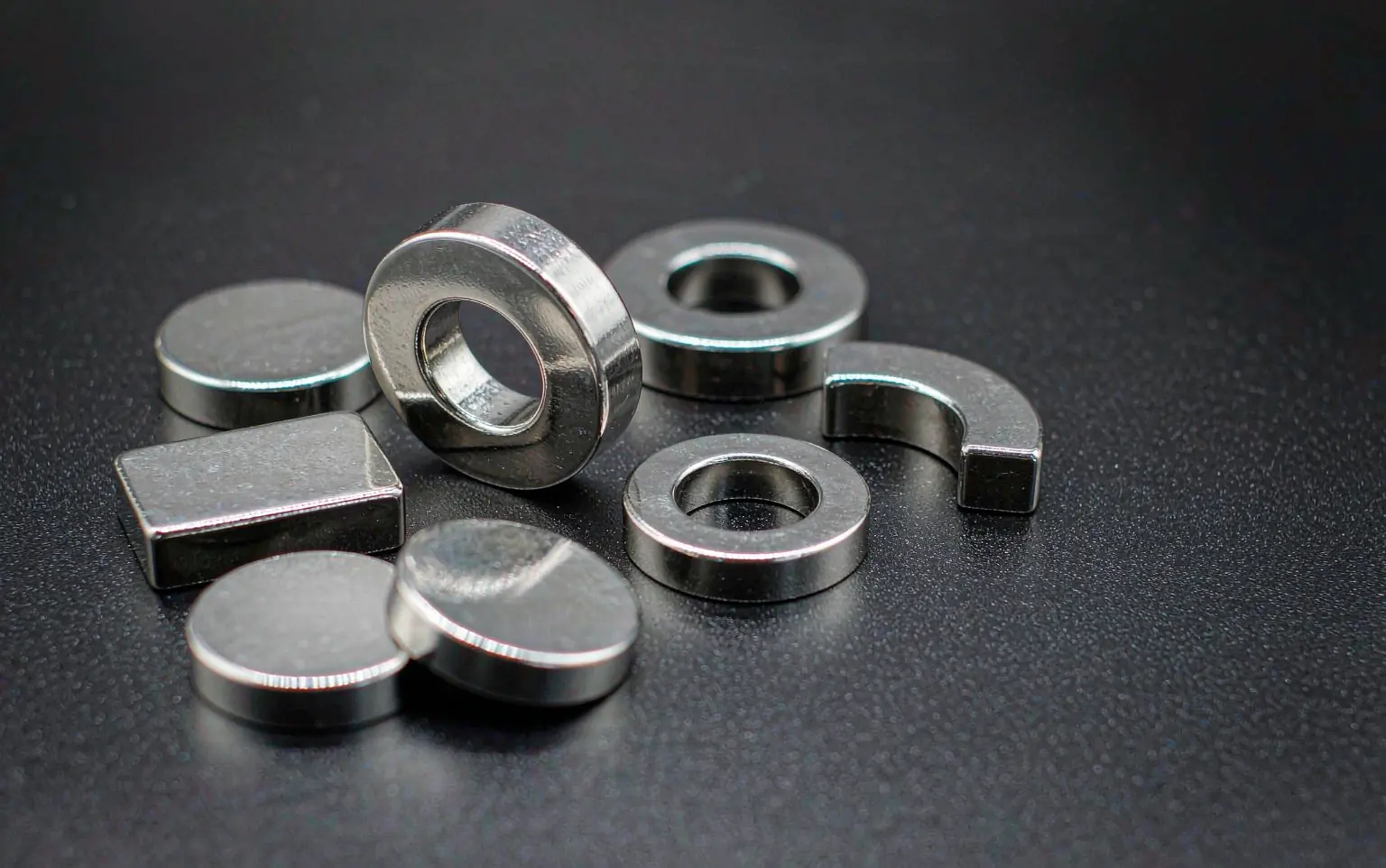
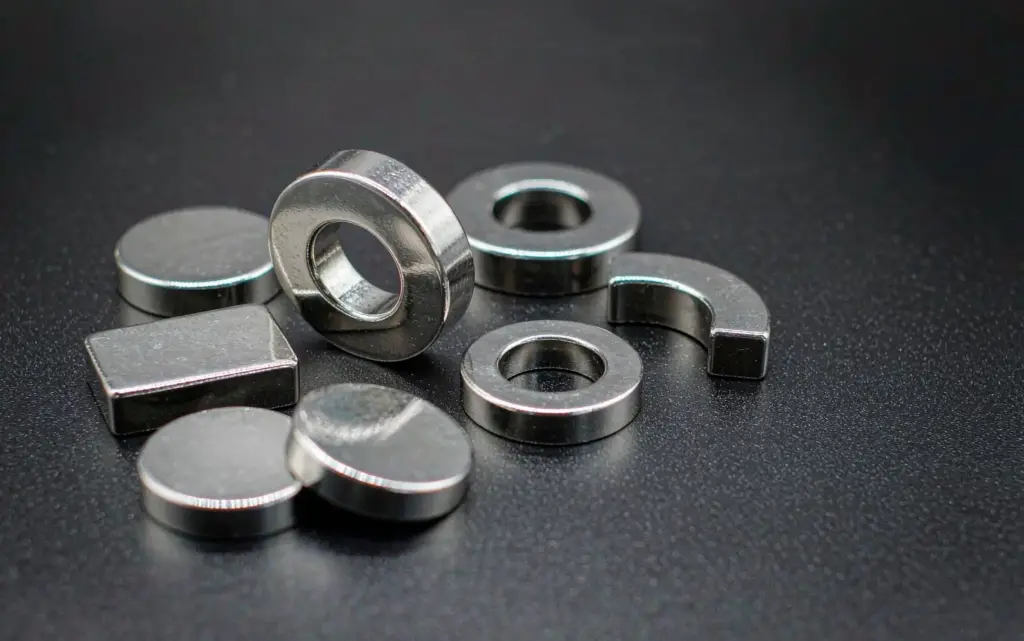
    NdFeB permanent magnets assortment - disc ring block and arc segment magnets with nickel plating
    intered NdFeB magnets in various shapes with NiCuNi coating

    Grade designations are the fastest way to get a preliminary answer — although the final answer always comes from a composition test. The table below reflects how our own standard production is formulated, and where each grade series typically falls under the controls.

    Grade seriesTypical max. operating temp.Heavy rare earth content in our standard productionExport license
    N (N35–N52)~80 °CNoneNot controlled
    M (M35–M50)~100 °CNoneNot controlled
    H (H35–H48)~120 °CNoneNot controlled
    SH (SH35–SH45)~150 °CNone in our standard productionNot controlled — confirm by test
    UH (UH30–UH40)~180 °CDy and/or TbControlled (1C904 / 1C905)
    EH (EH28–EH35)~200 °CDy and/or TbControlled (1C904 / 1C905)
    AH / higher~230 °CDy and/or TbControlled (1C904 / 1C905)

    In short: SH and below is normally outside the controls; UH and above normally requires a license. Two caveats matter here:

    • The classification is content-based, not grade-based in law. The announcement controls material containing Dy/Tb — so the grade name is only a starting point. A composition test is what customs will rely on.
    • Additions vary by supplier and by part. A grade supplied by one plant may be formulated differently from the same grade at another. If your project is temperature-critical, confirm the actual composition of the specific part you are buying, not just the grade label. You can compare grade properties with our magnet grade comparison tool.

    If your design does not require UH or higher, specifying SH or below in our standard formulation keeps the part outside the licensing regime — simpler documentation, and no licensing delay. Our engineers can review your operating temperature and geometry and tell you which route applies. See our NdFeB magnet range →

    How Long Does the License Actually Take? Plan for About Four Months NEW

    Most articles on this topic say timelines “vary.” In our experience handling these applications through 2025 and 2026, the realistic end-to-end processing time for an export license for controlled magnets is around four months.

    That number drives everything about your planning, so it is worth being blunt about it: if your project needs UH-grade or higher magnets and your schedule is tighter than about five months, you have a problem to solve early — not at the shipping stage.

    StageWhat happensPlan for
    Specification & composition testGrade confirmed, sample tested for Dy/Tb content1–2 weeks
    License application & approvalExporter applies to MOFCOM; documents and end-use information reviewed~4 months (our recent experience)
    ProductionYour parts are manufactured and inspectedyour supplier’s standard lead time (fill in your actual figure)
    ShippingExport declaration with control code; customs may query during the processPer destination and freight mode

    Two practical consequences:

    1. Start the conversation 5–6 months before your need date for controlled parts. Design freeze, sample approval and licensing should run in parallel, not in sequence.
    2. Ask your supplier to state the licensing step explicitly in the quotation. A quote that silently assumes 30-day delivery for a UH-grade part is a schedule risk, not a price advantage.

    If Your Schedule Is Tight: The HRE-Free Route

    If your schedule cannot absorb that lead time, there is a real alternative: specify a dysprosium- and terbium-free grade and skip the licensing queue entirely. We explain which grades qualify, what you give up in thermal performance, and how to switch in our guide to <a href=”https://www.hs-hardwares.com/2026/09/20/hre-free-ndfeb-dysprosium-free-grades/“>HRE-free NdFeB magnets</a>.

    Because dysprosium and terbium are the elements that put NdFeB magnets under control — and the reason for the four-month licensing path — there is growing buyer interest in HRE-free (heavy rare earth free) NdFeB grades: grades engineered to reach a given coercivity and operating temperature without Dy/Tb additions, typically through grain boundary diffusion and tighter process control.

    Whether this route is viable depends on your application:

    • Maximum operating temperature and temperature coefficients required
    • Shape and dimensional factors (which drive demagnetization risk at corners and thin sections)
    • Whether the design can accept a slightly different grade or coating package

    For applications that fit, HRE-free grades can remove the licensing step from the critical path and reduce exposure to heavy rare earth price volatility. It is an engineering trade-off, not a free win — but it is worth raising with your supplier’s technical team at the design stage, when a change is still cheap. Ask us to evaluate your operating conditions →

    Documents to Request from Your Supplier

    A compliant supplier should be able to provide these without hesitation:

    DocumentWhy it matters
    Composition test report (third-party or in-house with test method stated)Confirms whether Dy/Tb are present and at what level — the basis of the control classification
    Material grade & specification sheetLinks the test report to your actual order (grade, coating, dimensions)
    Control classification statementWhether the product falls under 1C902/1C904/1C905 and, if so, the control code to be declared
    Export license (for controlled shipments)Confirms the shipment is licensed; buyers importing into regulated sectors may need this for their own compliance records
    Correct HS classification (reference: 8505.11 for permanent metal magnets)Consistent declaration reduces the chance of customs queries

    Our own practice: composition testing for controlled-material classification is carried out at the customs-affiliated testing center in Ningbo — the laboratory whose reports customs itself relies on. For customer orders involving Dy/Tb-containing material, the test report travels with the shipment documentation, so there is a verifiable link between what was declared and what is in the box.

    Why Cutting Corners Will Cost You More

    Since 2025, Chinese customs has published a steady stream of penalty decisions involving NdFeB exports: magnets misdeclared by product name, contents declared as Dy-free that tested positive, and express shipments of sample quantities. Penalties have ranged from fines and confiscation to forced re-export of goods — and under China’s Export Control Law, serious cases can escalate further.

    For a buyer, the practical risks are concrete:

    • Seizure or return of your goods — your production line waits while the shipment is resolved.
    • Sudden supplier loss — a supplier caught violating export controls may be unable to ship for an extended period.
    • Compliance exposure on your side — if you import magnets into automotive, medical or defense-adjacent supply chains, your own customers increasingly audit the sourcing chain.

    Choosing a supplier with a documented, compliant export process is now a procurement decision, not just a quality decision.

    Frequently Asked Questions

    Are NdFeB magnets banned from export by China?
    No. Export controls are not a ban. Controlled magnets — SmCo magnets, and NdFeB magnets containing Dy or Tb — can be exported legally with a license from MOFCOM for each shipment. NdFeB magnets that do not contain Dy or Tb are outside the controlled magnet categories based on the announcement and official clarifications.

    Which grades need an export license?
    In our standard production, N, M, H and SH grades contain no Dy or Tb and are outside the controls; UH, EH and AH grades contain Dy and/or Tb and are controlled. Because the law is based on content rather than grade name, confirm the specific part by composition test.

    How long does the export license take?
    Based on our applications through 2025 and 2026, plan for around four months. There is no officially published processing time, so build the licensing step into your project schedule explicitly rather than treating it as paperwork at the shipping stage.

    My magnets are just small consumer parts. Do the rules still apply?
    Yes. The controls apply to the magnet material itself, including magnet powder and primary processed products like segments, rings and magnetic assemblies. Quantity does not matter — enforcement cases include small express shipments. Only products that are deeper-processed into finished devices (motors, speakers, etc.) fall outside the magnet categories.

    Has anything changed since the announcement?
    Export control policies continue to evolve, and additional announcements and clarifications have been issued since April 2025. This is exactly why the “last updated” date on this page matters, and why you should confirm current requirements with your supplier at order time.

    Key Takeaways for Buyers

    1. Since April 4, 2025, SmCo magnets and NdFeB magnets containing Dy/Tb require an export license for every shipment from China.
    2. SH and below: normally not controlled. UH and above: normally requires a license. Composition testing decides the final answer.
    3. Plan around four months for the licensing process on controlled parts — start 5–6 months before your need date.
    4. Request documentation — composition test report, classification statement, and license for controlled shipments — as a standard part of your procurement process.
    5. If your schedule cannot absorb the licensing time, evaluate HRE-free NdFeB grades with your supplier’s engineers at the design stage.

    Need magnets that ship cleanly and on schedule? Contact HS Hardwares — we manufacture NdFeB, SmCo and magnetic assemblies under a documented, compliant export process, and we will tell you exactly which category your parts fall into before you order.

    Contact Us

    Hangzhou HS Hardwares Co., Ltd.
    NdFeB Magnets · SmCo Magnets · Magnetic Assemblies · Precision Stamping Parts

    Send us your drawing or specification — we will confirm the material classification, export requirements and a realistic delivery schedule within one business day.

    Sources

    • MOFCOM & GACC Announcement No. 18 of 2025 — Decision on Implementing Export Controls on Certain Medium- and Heavy-Rare-Earth Related Items (April 4, 2025), mofcom.gov.cn
    • MOFCOM, FAQ No. 4 on Dual-Use Items (Rare Earths) (April 21, 2025), mofcom.gov.cn
    • Customs penalty decisions published by Ningbo, Xiamen and Shanghai customs (2025–2026), customs.gov.cn
    • Grade classification and licensing timelines in this article reflect HS Hardwares’ own production and export experience, 2025–2026.

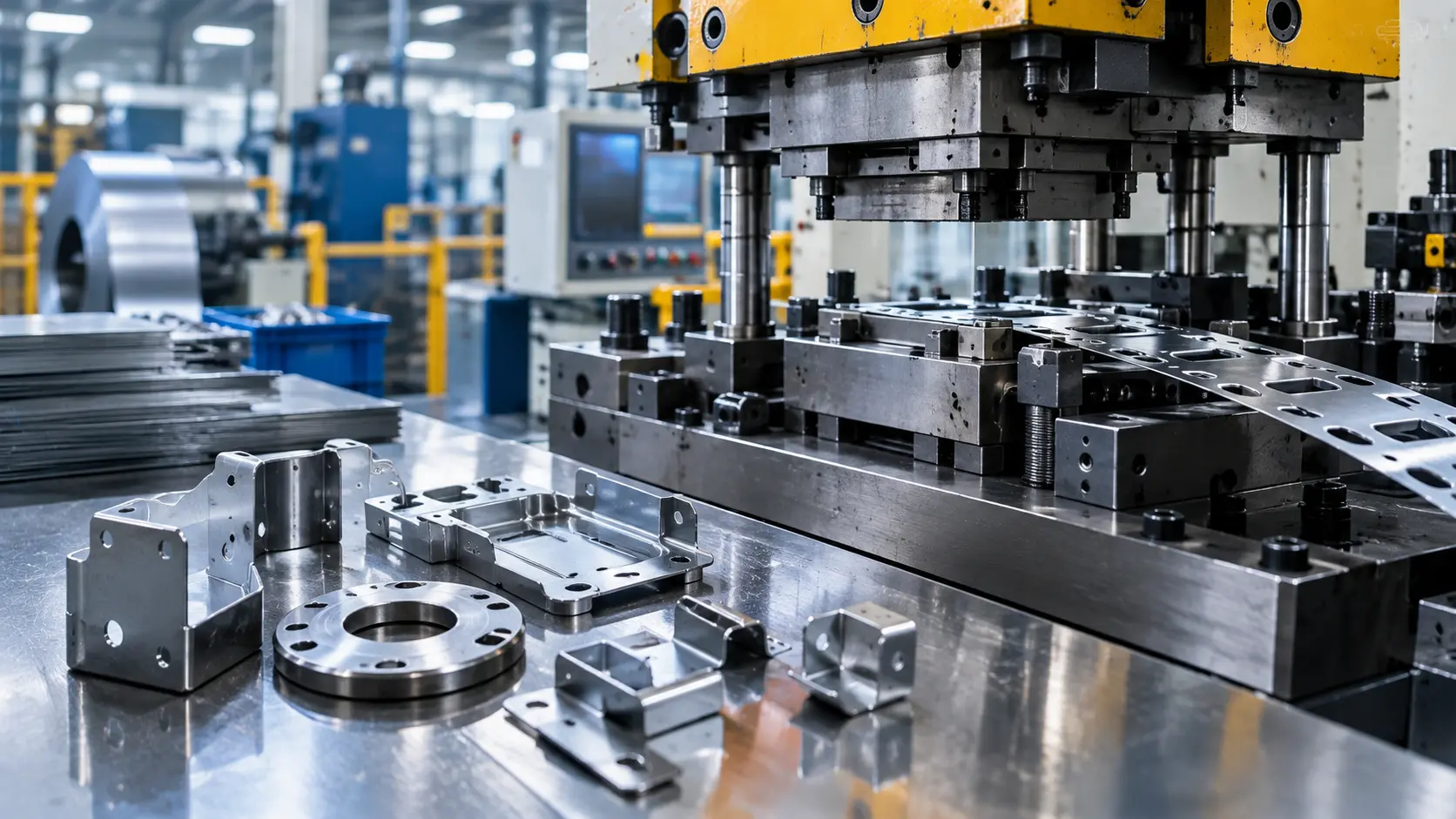
  • Common Defects in Metal Stamping and Solutions

    Common Defects in Metal Stamping and Solutions

    Metal stamping is one of the most efficient manufacturing processes for producing high-volume precision components. It is widely used in automotive systems, industrial equipment, electric motors, electronics, appliances, and automation machinery. However, even well-designed stamping operations can experience quality issues that affect dimensional accuracy, surface finish, mechanical performance, and production efficiency.

    Understanding common metal stamping defects and their causes is essential for improving product quality and reducing manufacturing costs. This article explains the most common defects in metal stamping and practical solutions for preventing them.

    (more…)
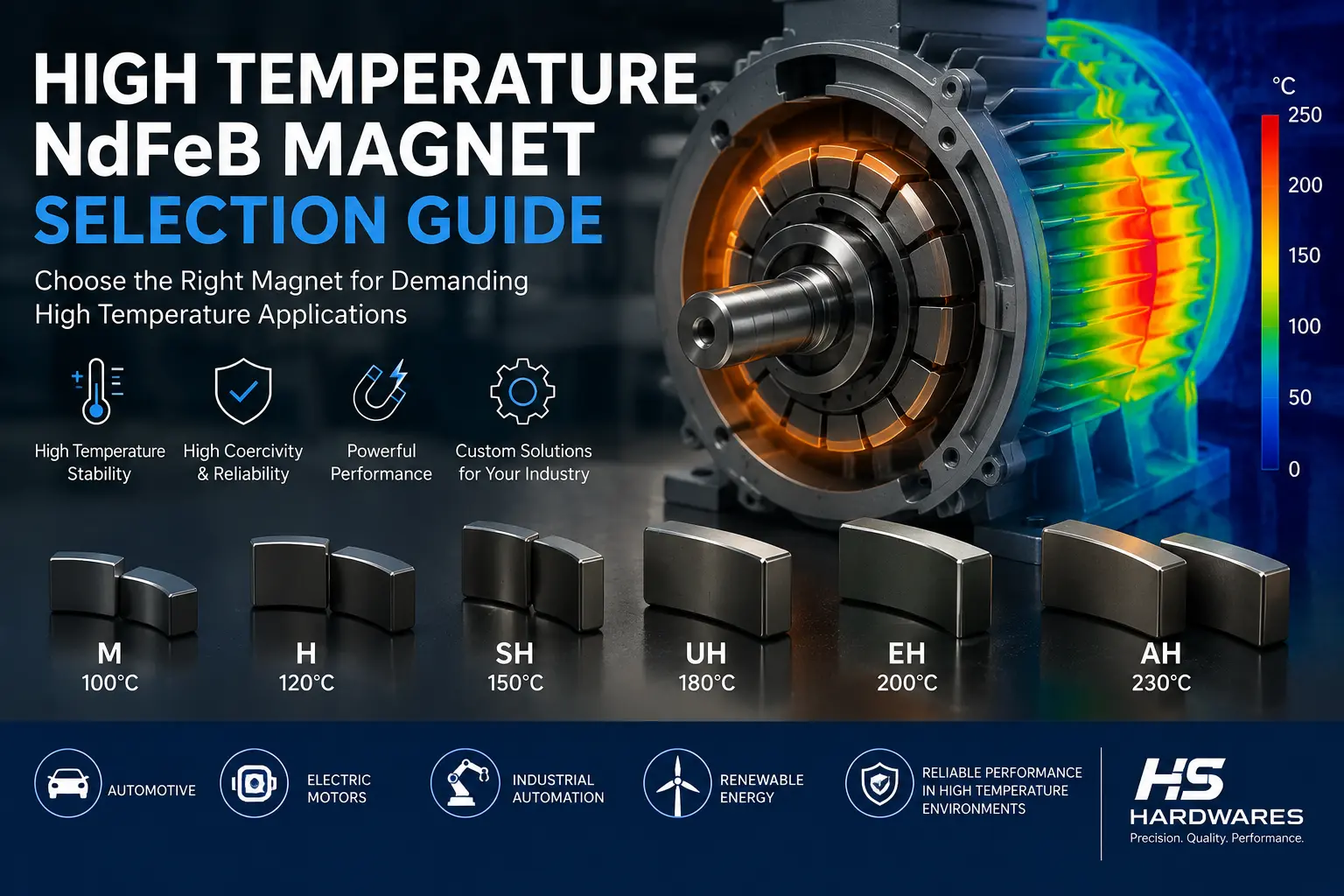
  • High Temperature NdFeB Magnet Selection Guide

    High Temperature NdFeB Magnet Selection Guide

    Neodymium Iron Boron (NdFeB) magnets offer the highest magnetic energy density of any commercially available permanent magnet material. However, standard NdFeB magnets can lose magnetic performance when exposed to elevated temperatures. For demanding applications such as electric motors, automotive systems, industrial automation, and renewable energy equipment, selecting the appropriate high temperature NdFeB grade is essential for long-term reliability.

    This guide explains how operating temperature affects magnetic performance and provides practical recommendations for choosing the right high temperature NdFeB magnet.

    (more…)
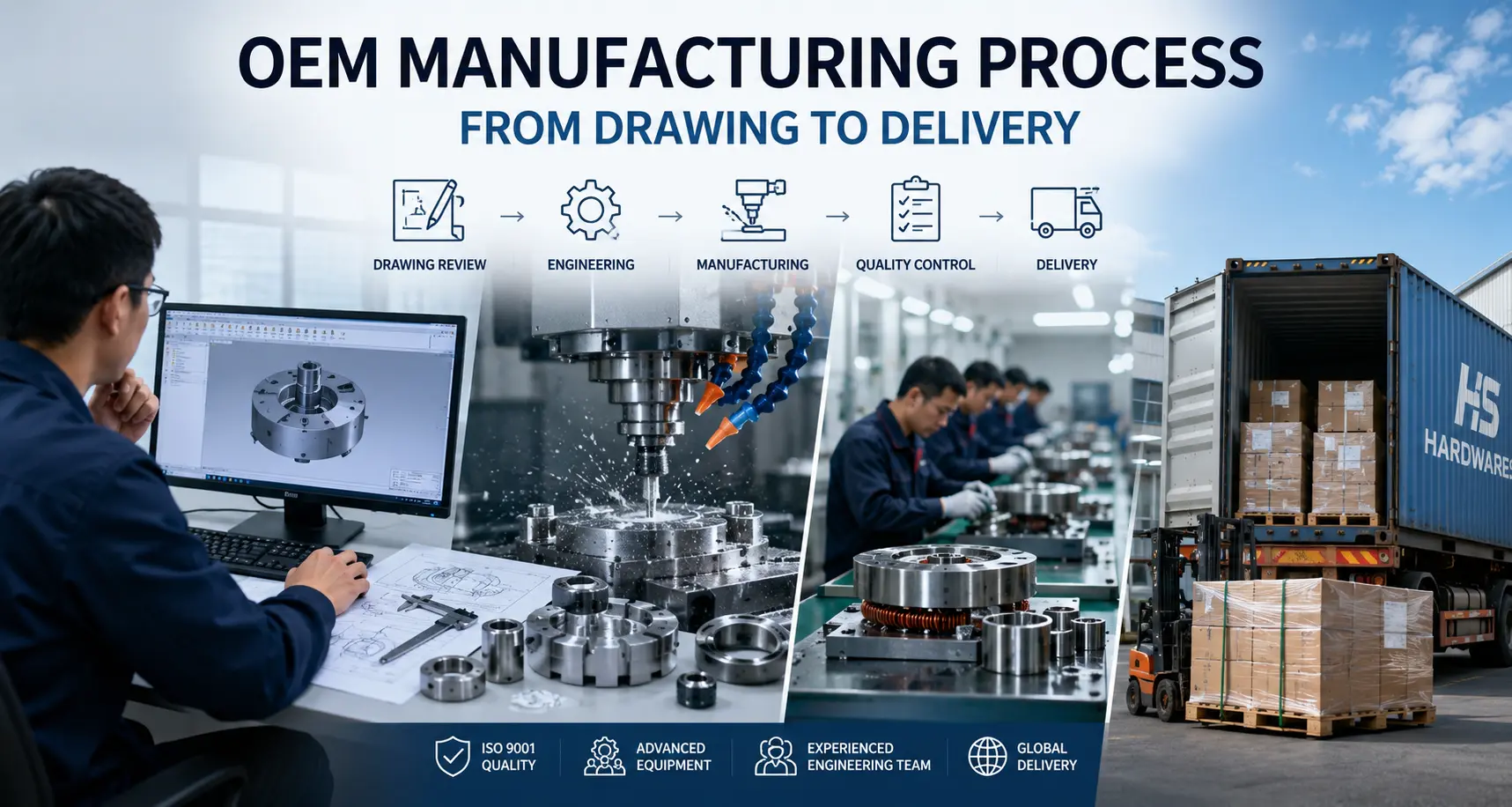
  • OEM Manufacturing Process: From Drawing to Delivery

    OEM Manufacturing Process: From Drawing to Delivery

    OEM manufacturing allows companies to transform engineering concepts into reliable, production-ready components without investing in their own manufacturing facilities. Whether you’re sourcing custom magnetic assemblies, precision stamping parts, or motor components, understanding the OEM process helps reduce project risks, improve communication, and accelerate product development.

    At HS Hardwares, we provide a complete OEM manufacturing service that supports customers from initial design review to global delivery.

    (more…)
  • How to Choose a Reliable Magnet Manufacturer

    How to Choose a Reliable Magnet Manufacturer

    Industrial magnets are essential components in countless applications, from electric motors and automotive systems to medical devices and renewable energy equipment. The performance, reliability, and lifespan of your products often depend on the quality of the magnets used. Choosing the right magnet manufacturer is therefore a critical decision that can directly impact your supply chain, production costs, and overall product performance.

    With numerous suppliers available worldwide, understanding how to evaluate a magnet manufacturer can help ensure a successful long-term partnership.

    (more…)
  • What Is Precision Metal Stamping?

    What Is Precision Metal Stamping?

    Precision metal stamping is a highly efficient manufacturing process used to produce complex metal components with exceptional accuracy, consistency, and repeatability. By using specialized dies and stamping presses, manufacturers can transform flat metal sheets into precise parts that meet strict dimensional tolerances and quality requirements. This process is widely used across industries such as automotive, electronics, aerospace, medical devices, renewable energy, and industrial equipment.

    (more…)
  • Industrial Motor Magnet Selection Guide

    Industrial Motor Magnet Selection Guide

    Permanent magnets are essential components in modern industrial motors. They directly influence motor efficiency, torque output, power density, and operational reliability. Selecting the right magnet can significantly improve motor performance while reducing energy consumption and maintenance costs.

    (more…)