
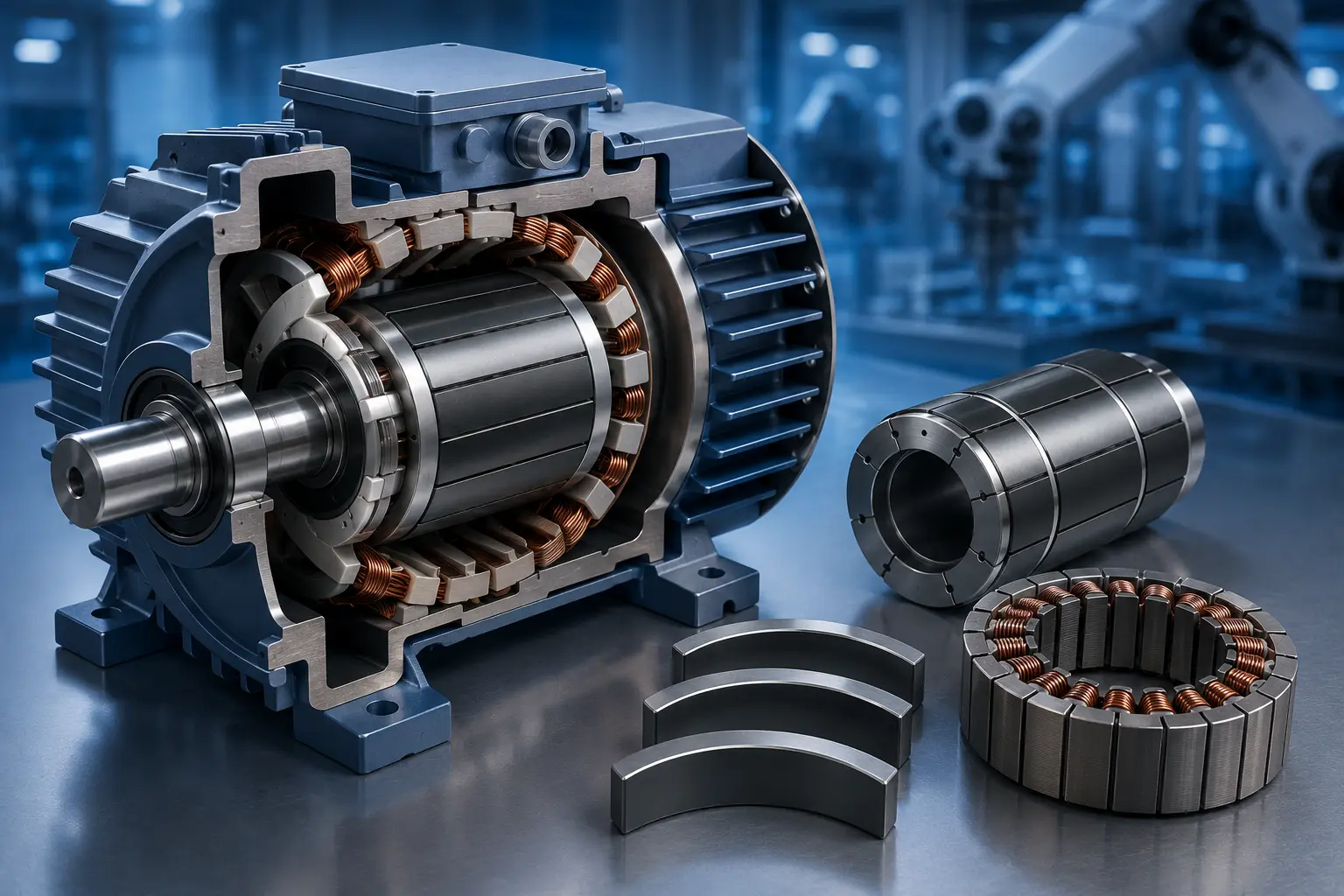
Permanent magnets are essential components in modern industrial motors. They directly influence motor efficiency, torque output, power density, and operational reliability. Selecting the right magnet can significantly improve motor performance while reducing energy consumption and maintenance costs.
Common Magnet Types for Industrial Motors
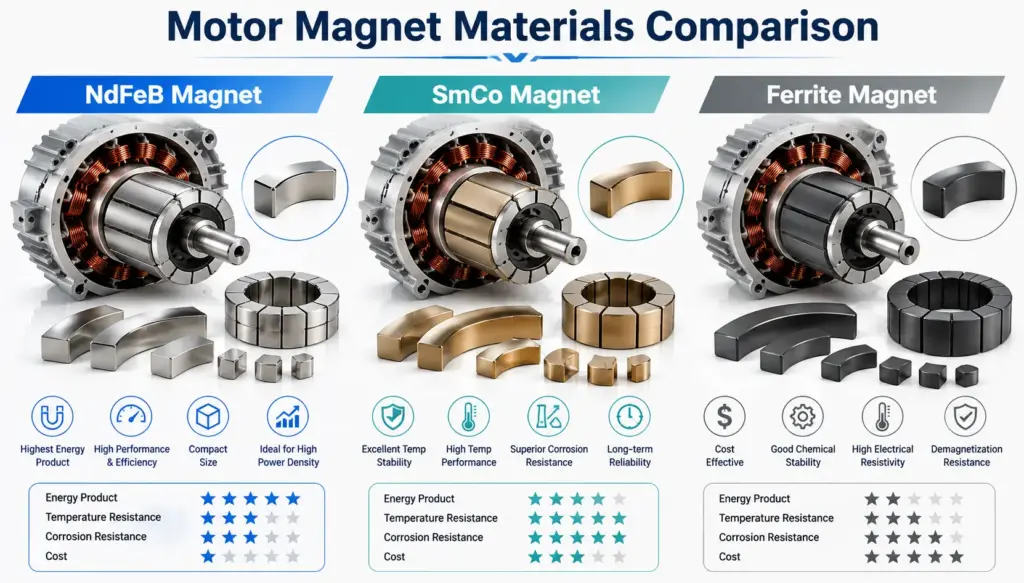
NdFeB Magnets
NdFeB (Neodymium Iron Boron) magnets are the most widely used permanent magnets in industrial motors due to their exceptional magnetic strength and high energy density.
Key benefits include:
- High torque output
- Compact motor design
- Excellent efficiency
- Cost-effective performance
They are commonly used in servo motors, automation equipment, electric vehicles, and robotics.
SmCo Magnets
Samarium Cobalt magnets offer superior temperature stability and corrosion resistance.
Advantages include:
- Excellent high-temperature performance
- Strong corrosion resistance
- Long-term magnetic stability
They are ideal for aerospace, medical equipment, and other demanding environments.
Ferrite Magnets
Ferrite magnets provide a lower-cost solution for applications where high magnetic strength is not required.
Typical applications include household appliances and general industrial motors.
Temperature Considerations
Temperature is one of the most important factors when selecting motor magnets.
Standard NdFeB magnets typically operate up to 80°C, while high-temperature grades can withstand temperatures up to 230°C.
For extreme operating environments, SmCo magnets are often the preferred choice due to their excellent thermal stability.
Magnet Shape Selection
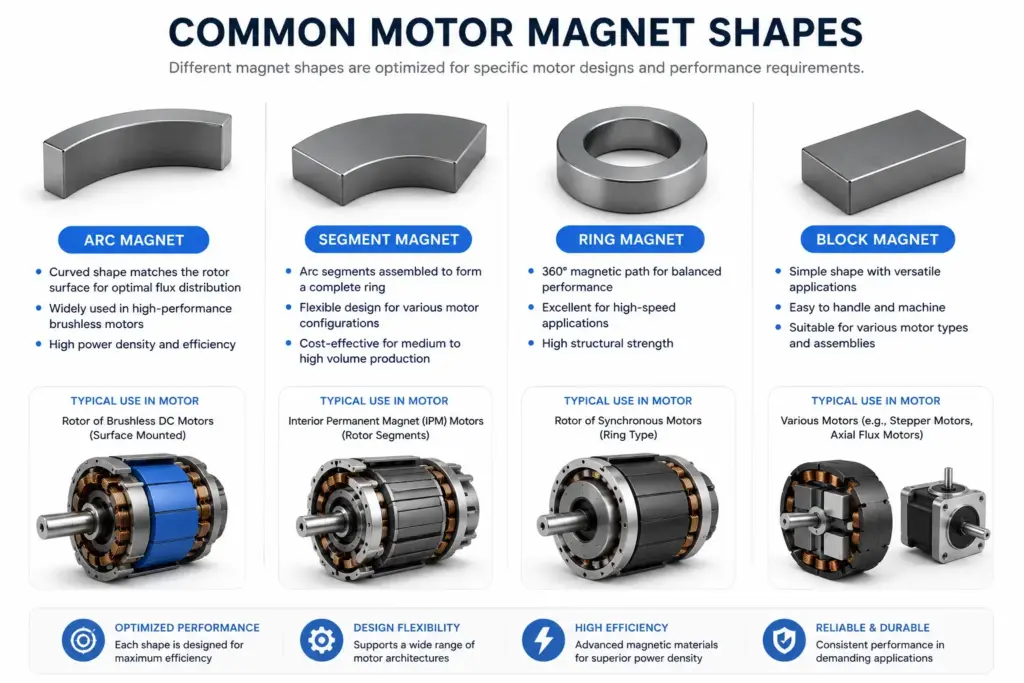
Different motor designs require different magnet geometries.
Common options include:
- Arc Magnets
- Segment Magnets
- Ring Magnets
- Custom-Shaped Magnets
Arc magnets are particularly popular in permanent magnet rotor assemblies because they help optimize magnetic flux distribution and motor efficiency.
Key Selection Factors
When choosing a magnet for an industrial motor, consider the following:
Magnetic Strength
Higher magnetic strength allows for greater torque and more compact motor designs.
Operating Temperature
Choose a magnet grade that matches the motor’s working environment.
Corrosion Resistance
For humid or corrosive environments, protective coatings such as nickel, zinc, or epoxy are recommended.
Rotor Design
Both surface-mounted and interior permanent magnet rotor designs require specific magnet configurations.
Cost and Performance Balance
The ideal solution should provide the required performance while maintaining cost efficiency.
Typical Applications
Industrial motor magnets are widely used in:
- Automation systems
- Servo motors
- Electric vehicles
- Industrial pumps
- Robotics
- Wind turbine generators
As industries continue to demand higher efficiency and greater power density, permanent magnet motors have become increasingly important.
Conclusion
Choosing the right magnet is critical to achieving optimal motor performance. NdFeB magnets are the preferred option for most industrial applications due to their high magnetic strength and efficiency, while SmCo magnets are ideal for high-temperature and harsh environments.
Working with an experienced manufacturer can help ensure proper material selection, custom design support, and consistent product quality, ultimately improving the performance and reliability of your motor systems.
Leave a Reply