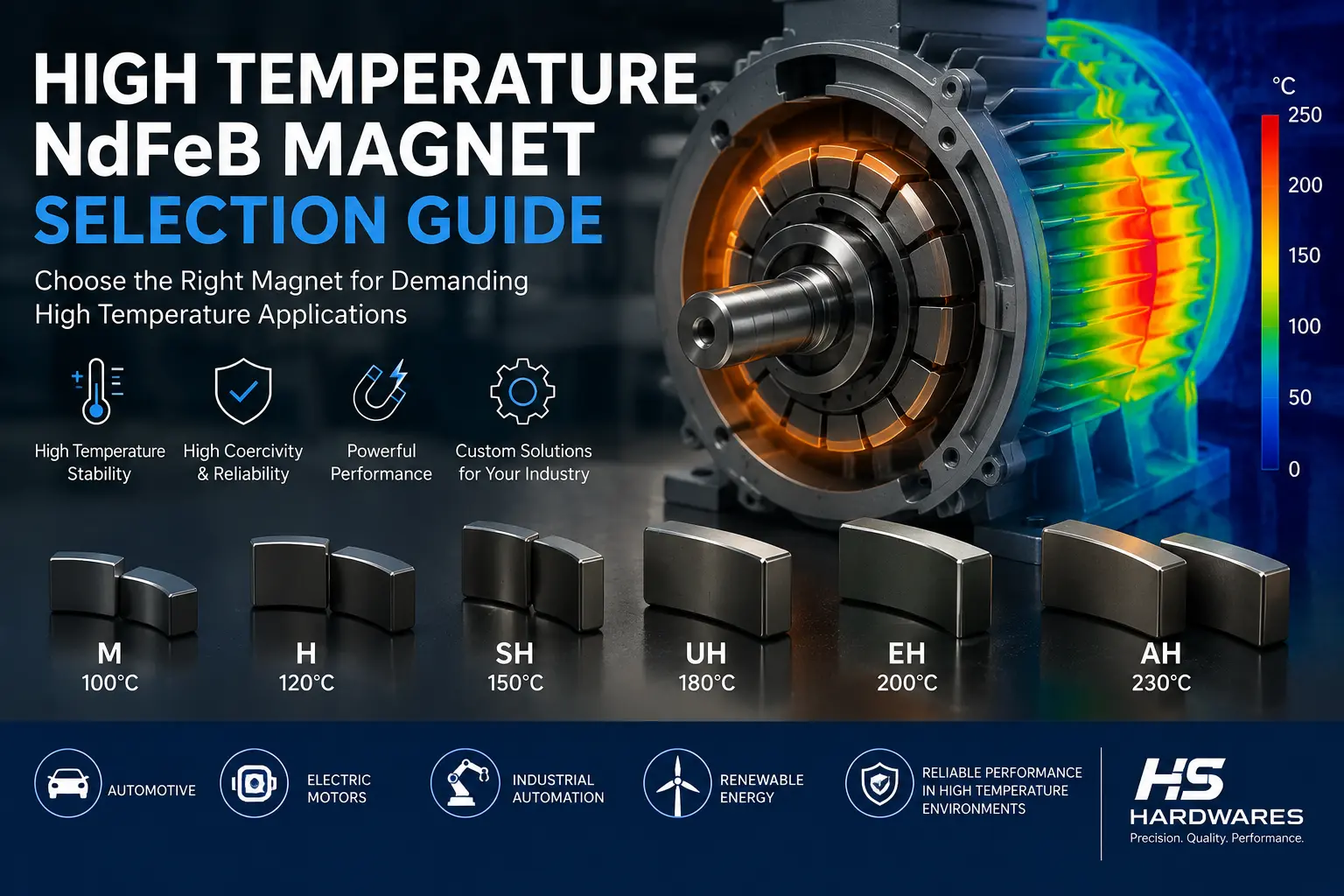
Neodymium Iron Boron (NdFeB) magnets offer the highest magnetic energy density of any commercially available permanent magnet material. However, standard NdFeB magnets can lose magnetic performance when exposed to elevated temperatures. For demanding applications such as electric motors, automotive systems, industrial automation, and renewable energy equipment, selecting the appropriate high temperature NdFeB grade is essential for long-term reliability.
This guide explains how operating temperature affects magnetic performance and provides practical recommendations for choosing the right high temperature NdFeB magnet.
Why Temperature Matters
Every permanent magnet has a maximum operating temperature. Beyond this limit, magnetic properties begin to decline, and irreversible demagnetization may occur if the magnet is exposed to excessive heat or strong opposing magnetic fields.
Common sources of elevated temperatures include:
- Electric vehicle traction motors
- Industrial servo motors
- Wind turbine generators
- Automotive sensors
- Medical equipment
- High-speed automation machinery
Selecting an appropriate magnet grade helps maintain stable performance throughout the product’s service life.
Understanding High Temperature Grades
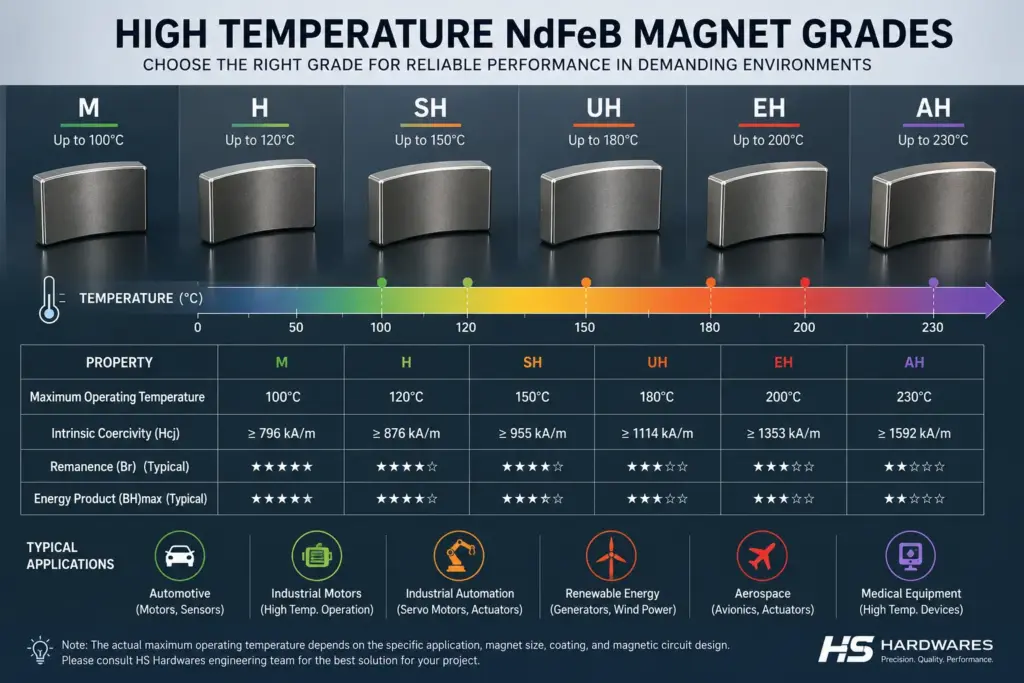
NdFeB magnets are available in multiple temperature grades. The suffix following the grade number indicates the magnet’s intrinsic coercivity and maximum recommended operating temperature.
| Grade Suffix | Typical Maximum Operating Temperature |
|---|---|
| M | Up to 100°C |
| H | Up to 120°C |
| SH | Up to 150°C |
| UH | Up to 180°C |
| EH | Up to 200°C |
| AH | Up to 230°C |
Although higher-temperature grades offer improved thermal stability, they generally provide slightly lower maximum magnetic energy than standard grades. Engineers must balance magnetic strength with thermal requirements.
Key Factors to Consider
Operating Temperature
The first step is identifying the actual operating temperature rather than the ambient temperature. Components such as motors or generators often run significantly hotter than their surrounding environment.
Always include a reasonable safety margin when selecting the magnet grade to account for temporary temperature spikes.
Intrinsic Coercivity
Intrinsic coercivity (Hcj) measures a magnet’s resistance to demagnetization. Applications exposed to high temperatures or strong reverse magnetic fields require higher coercivity grades such as SH, UH, or EH.
High coercivity is particularly important for:
- High-speed motors
- Permanent magnet generators
- Magnetic couplings
- Industrial actuators
Magnetic Performance
Higher operating temperatures naturally reduce magnetic flux density. Engineers should evaluate:
- Required magnetic force
- Working air gap
- Magnetic circuit efficiency
- Expected temperature range
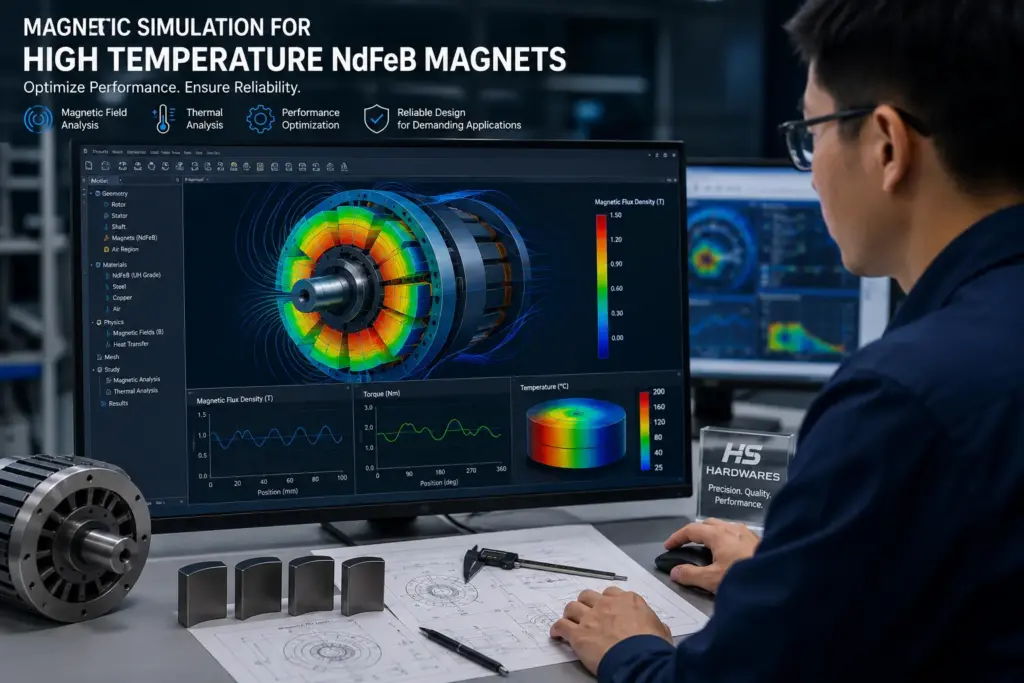
Magnetic simulation during the design stage can optimize performance while minimizing material costs.
Corrosion Protection
Heat, humidity, and corrosive environments can accelerate surface degradation.
Common coating options include:
- Nickel (Ni-Cu-Ni)
- Epoxy
- Zinc
- Phosphate
- Parylene
For outdoor or marine applications, epoxy coatings often provide superior corrosion resistance.
Typical High Temperature Applications
High temperature NdFeB magnets are widely used across numerous industries.
Electric Motors
Permanent magnet motors require stable magnetic performance under continuous thermal loads. High-temperature grades improve efficiency while reducing the risk of demagnetization.
Automotive Systems
Electric power steering, ABS sensors, hybrid vehicle motors, and electric compressors frequently operate at elevated temperatures.
Renewable Energy
Wind turbines and industrial generators require magnets capable of maintaining magnetic output over extended operating periods and varying environmental conditions.
Industrial Automation
Robotic systems, servo motors, magnetic couplings, and precision actuators depend on reliable magnetic performance to ensure accurate positioning and long service life.
Common Selection Mistakes
Many engineering issues originate from incorrect magnet selection rather than manufacturing defects.
Avoid these common mistakes:
- Selecting magnets based only on magnetic strength
- Ignoring actual operating temperature
- Using insufficient coercivity
- Overlooking corrosion protection
- Not considering assembly-induced demagnetization
- Skipping magnetic circuit analysis
Working with an experienced manufacturer during the design stage can help prevent costly redesigns.
Why Partner with HS Hardwares?
HS Hardwares supplies custom NdFeB magnets and magnetic assemblies for demanding industrial applications. Our engineering team supports customers throughout the product development process, from material selection to production and quality verification.
Our capabilities include:
- Custom NdFeB magnet manufacturing
- High-temperature magnet solutions
- Magnetic assembly design
- Magnetic circuit simulation
- Precision machining
- Surface coating options
- ISO 9001 quality management
- OEM and ODM manufacturing
Whether your application requires magnets for electric vehicles, industrial motors, automation equipment, or renewable energy systems, we help identify the most suitable material and temperature grade for reliable long-term performance.
Conclusion
Choosing the correct high temperature NdFeB magnet requires more than selecting the strongest available grade. Engineers must carefully evaluate operating temperature, intrinsic coercivity, magnetic performance, corrosion resistance, and overall system design.
By considering these factors early in the development process, manufacturers can improve product reliability, reduce maintenance costs, and extend equipment service life. Partnering with an experienced magnet manufacturer ensures that every component is optimized for its intended operating environment.
Leave a Reply