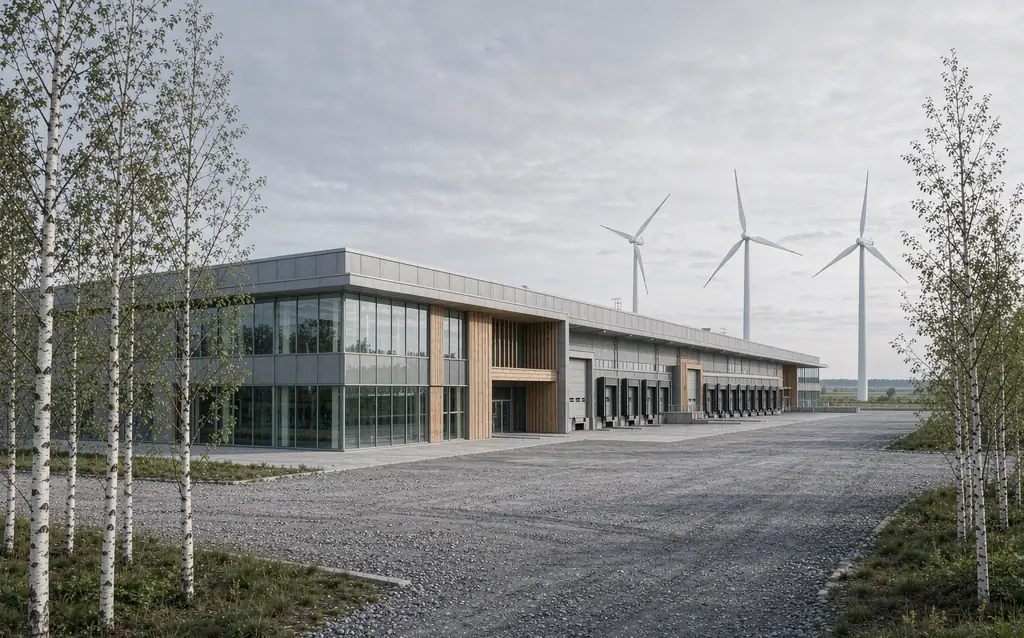
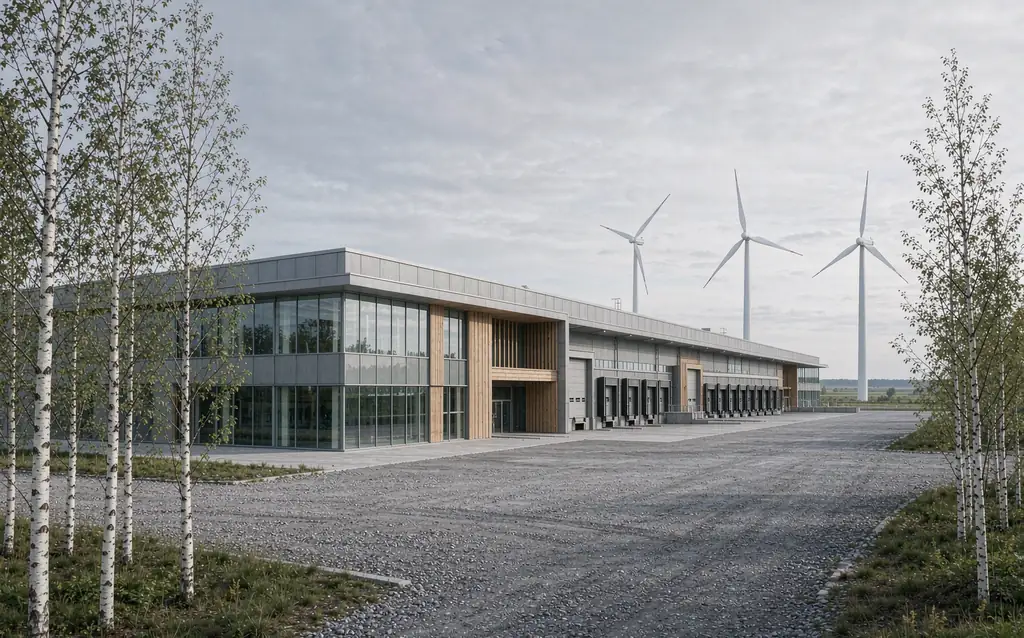
In September 2025, Europe switched on its first large-scale sintered NdFeB magnet factory in Narva, Estonia. For procurement teams who have spent the last two years navigating export licences, price volatility and single-source risk, this sounds like the beginning of a genuinely alternative supply chain. It is — partially. Europe is building real magnet capacity, and the Narva plant is a genuine milestone. But building factories turns out to be the fast part. The slow part is raw material, and that gap between the two is exactly what buyers need to understand before reshaping their sourcing strategy.
This article explains what Europe has actually built, what the Critical Raw Materials Act promises, where the feedstock will — and will not — come from, and what a realistic sourcing plan looks like for the rest of this decade.
Why Europe Is Building Magnet Capacity Now
The trigger is arithmetic. More than 90% of the world’s sintered NdFeB magnets are produced in China, according to Neo Performance Materials’ own filings. For electric vehicle motors, wind turbines, industrial drives and defence applications, that is a single point of failure sitting under the entire European industrial base.
The EU’s response is the Critical Raw Materials Act (CRMA), which entered into force on 23 May 2024. It sets four benchmarks for the EU’s annual consumption of strategic raw materials by 2030:
| CRMA benchmark (by 2030) | Target |
|---|---|
| Extraction inside the EU | ≥ 10% |
| Processing inside the EU | ≥ 40% |
| Recycling inside the EU | ≥ 25% |
| Dependence on any single non-EU country | ≤ 65% |
Two things matter for buyers here. First, the benchmarks are non-binding targets, not quotas or supply guarantees — the European Court of Auditors and the Bruegel think tank have both already questioned whether the designated strategic projects can reach them. Second, the first round of 60 designated strategic projects (47 of them inside the EU) covers everything from lithium to graphite, so rare earths are competing for the same capital, permits and skilled labour as every other critical material.
China’s export controls on heavy rare earths — the regime we explain in our buyer’s guide to China’s NdFeB export controls — added urgency on both sides. European buyers experienced the licence queues directly; European policymakers saw what happens when a single country controls both the material and the magnet.
The Estonia Build-Out: What Actually Exists Today
The Narva facility, operated by Canada-headquartered Neo Performance Materials, is the centre of gravity of Europe’s magnet strategy. What it is, factually:
| Milestone | Status |
|---|---|
| Facility inaugurated, Narva, Estonia | September 2025 |
| Phase 1 sintered NdFeB capacity | 2,000 tonnes/year |
| Expansion potential (Phase 2) | 5,000 tonnes/year |
| Share of EU magnet demand at full build-out | up to ~15% |
| First sintered magnet samples | Shipped April 2025 (18,000 pieces to a Tier 1 traction motor customer) |
| PPAP / mass production | Scheduled through 2026 |
| Phase 1 capital cost | ~US$75 million, with ~23% EU grant reimbursement of eligible costs |
| Demand visibility | Multi-year capacity MOU with Bosch |
Neo reported producing its one-millionth magnet at Narva within months of opening, and a “made-in-Europe” magnet was showcased at the 2025 G7 summit — signals that this plant has political weight well beyond its tonnage.
Upstream, at Sillamäe on the coast 30 km away, Neo’s Silmet plant has separated rare earth oxides for decades. In April 2026, Neo commissioned a new heavy rare earth separation line there, producing the plant’s first separated dysprosium and terbium oxides — the elements that make high-temperature NdFeB grades possible, and the same elements that trigger China’s export licensing. Combined, Narva and Silmet are the closest thing Europe has to an integrated magnet value chain: oxide separation, metal, alloy and finished magnets inside one small country.
The Hard Part: Raw Materials Do Not Appear on Schedule
Here is where the honest conversation begins. Processing capacity can be commissioned in three years; a diversified raw material base cannot. Three facts illustrate the gap.
1. The feedstock question is still open. Independent supply-chain analysts consistently flag feedstock as the critical unanswered question for the Estonian cluster: the plants need secure, traceable, commercially viable supplies of NdPr oxide, dysprosium and terbium — at prices that survive comparison with Chinese material. Neo has been actively diversifying (supply cooperation with Australian producers, an offtake MOU with Globe Metals & Mining, and — notably — the March 2025 sale of its Chinese separation joint ventures to Shenghe Resources, while retaining minority stakes and the exclusive right to distribute those Chinese ventures’ heavy rare earth products outside China for five years). Read that last part carefully: even the most committed Western integrator still keeps a contractual foot in Chinese heavy rare earth supply, because that is where the molecules are.
2. The price gap tells the same story. Material sourced and priced inside China trades at a steep discount to ex-China material:
| Element | China domestic benchmark (Apr 2026) | Ex-China assessment (May 2026) | Gap |
|---|---|---|---|
| Dysprosium oxide | ~US$220/kg | ~US$1,450/kg | ~6.5× |
| Terbium oxide | ~US$970/kg | ~US$4,500/kg | ~4.6× |
European magnet capacity must either secure ex-China feedstock at those prices, import Chinese material under export licence, or design around heavy rare earths. All three routes exist — none is free.
3. Not every European project survives. GKN Powder Metallurgy cancelled its German sintered magnet project in 2025 after investing roughly €20 million in a pilot plant that had targeted 4,000 tonnes/year by 2030. Building magnets in Europe is strategically desirable and commercially hard at the same time. Solvay’s La Rochelle facility — targeting industrial-scale dysprosium and terbium separation by late 2026, with a goal of supplying 30% of Europe’s magnet-grade oxide market by 2030 — is the other project to watch alongside Estonia.
None of this says Europe will fail. It says the 2030 benchmarks are ambitions measured against chemical engineering timelines: new separation capacity, new metallisation, new magnet plants and customer qualification cycles each take years, and they must all overlap to close the loop.
What This Means for Buyers: A Realistic Sourcing Plan
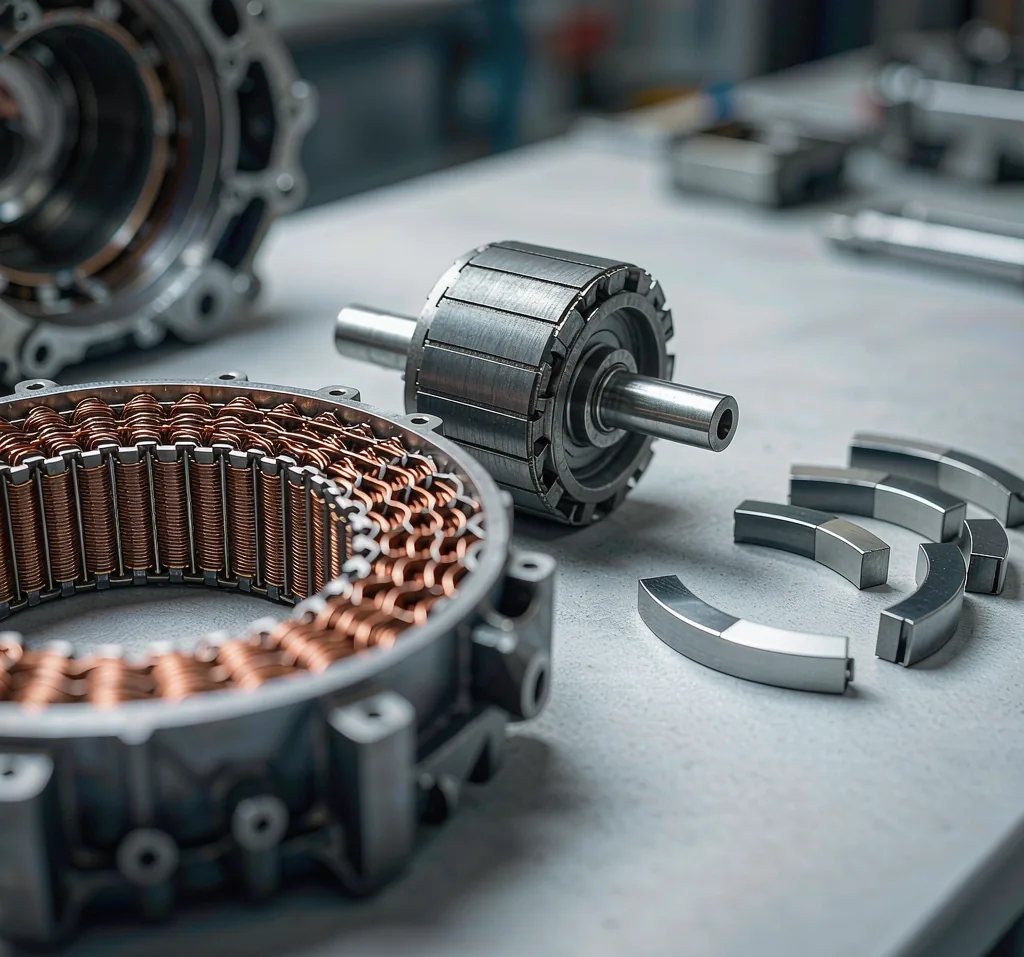
If you buy magnets into Europe — automotive, wind, industrial automation, sensors — here is the strategy the facts actually support.
Treat 2030 as a direction, not a supply date. The CRMA benchmarks are non-binding. Even if every strategic project delivers, rare earth magnet supply in Europe will be tight, partially qualified and premium-priced through the second half of this decade. Narva’s output will be chased by every OEM in Europe; first allocations logically go to traction motors, wind and defence.
Expect a price premium for non-China supply — and budget for it. The Dy/Tb price table above shows the cost base. A European sintered magnet will not be cheaper than a Chinese one. What it buys you is provenance, tariff insulation and audit-friendliness. For some product lines that premium is worth paying; for others it is not.
Run a dual-track supplier strategy. Qualify one European or non-Chinese supplier for strategic, traceability-sensitive product lines — and simultaneously maintain a compliant Chinese supply line with licence lead times engineered into your planning. Neither track alone covers all your risk: the European track lacks volume and cost, the Chinese track carries export-control lead times (about four months for licensed heavy rare earth grades, in our actual 2025–2026 experience, as we detail in our export compliance guide).
Engineer the heavy rare earths out where you can. For applications operating below roughly 150°C, HRE-free NdFeB grades sidestep export licensing entirely and reduce exposure to dysprosium and terbium scarcity on any supply route — Chinese, Estonian or otherwise. We explain the engineering trade-offs in our HRE-free guide. This is the single most under-used lever in European procurement right now.
Ask every supplier two questions. Where are the magnets sintered? And where does the feedstock come from? A magnet can be “made in Europe” from Chinese oxides, or “made in China” under full export-control compliance with third-party testing. Both can be legitimate answers — but you should know which one you are buying, and your customers’ compliance departments increasingly ask.
The Bottom Line
Europe’s magnet build-out is real, and Narva is a genuine milestone — the first time in a generation that sintered NdFeB capacity of scale exists on European soil, with heavy rare earth separation emerging beside it. But raw material diversification lags capacity by years, the 2030 targets are non-binding, and the price gap between Chinese and ex-China material remains wide. For buyers, the winning move is not to switch supply chains on a headline. It is to run dual tracks: European capacity where provenance justifies the premium, compliant Chinese supply where cost and volume still dominate — and HRE-free engineering wherever the operating temperature allows.
Need a second opinion on which of your parts can move to HRE-free grades, or what compliant China-sourced supply really costs in lead time and paperwork? Contact HS Hardwares — we manufacture NdFeB, SmCo and magnetic assemblies under a documented, compliant export process, and we will tell you exactly which route fits your application.
Xu Bo
Hangzhou HS Hardwares Co., Ltd.
Email: info@hshardwares.com | Phone/WhatsApp: +86 136 6665 6994
www.hs-hardwares.com
Frequently Asked Questions
Where are NdFeB magnets made today?
More than 90% of the world’s sintered NdFeB magnets are produced in China, according to Neo Performance Materials’ public filings. Europe’s first large-scale sintered magnet plant opened in Narva, Estonia in September 2025, with 2,000 tonnes/year of Phase 1 capacity.
How much of Europe’s magnet demand can the Narva plant cover?
At full Phase 2 build-out of about 5,000 tonnes per year, the facility could meet roughly 15% of EU demand. Phase 1 output is being qualified with automotive and industrial customers through 2026.
Can Europe make magnets without Chinese raw materials?
Not yet at commercial scale. European separation and magnet capacity is ramping, but feedstock — especially dysprosium and terbium — still depends heavily on sources tied to China, and ex-China material trades at a 4–6× premium. The EU’s 2030 targets for processing (40%) and recycling (25%) are non-binding benchmarks.
Should buyers switch to European magnet suppliers now?
Not wholesale. Automotive qualification cycles run 12–24 months, early output is allocated to EV, wind and defence programmes, and non-China supply carries a premium. A dual-track strategy — qualified European supply for strategic lines plus compliant Chinese supply with licence lead times built in — matches the actual market structure.
How do China’s export controls affect European magnet buyers?
NdFeB containing dysprosium or terbium above trace levels requires a Chinese export licence, adding roughly four months to lead time based on our 2025–2026 experience. HRE-free grades below about 150°C operating temperature avoid the licence entirely — see our HRE-free guide for the engineering trade-offs.
Key Takeaways for Buyers
- Europe’s first large-scale sintered NdFeB plant (Narva, Estonia, September 2025) starts at 2,000 t/y and could reach ~15% of EU demand at full build-out.
- The CRMA’s 2030 benchmarks — 40% EU processing, 25% recycling, ≤65% single-country dependence — are non-binding ambitions, not supply guarantees.
- Feedstock, not factories, is the bottleneck: ex-China dysprosium traded around US$1,450/kg in May 2026, roughly 6.5× the Chinese domestic benchmark.
- Non-China magnet supply will be premium-priced and oversubscribed through 2026–2028; qualification takes 12–24 months.
- The practical strategy is dual-track sourcing plus HRE-free engineering where temperature allows.
Sources
- Neo Performance Materials, Management’s Discussion & Analysis Q1 2025 (Narva facility capacity, capital cost, EU grant, first samples, sale of Chinese separation assets)
- Neo Performance Materials company announcements, April 2026 (commissioning of heavy rare earth separation at Silmet)
- Council of the EU, “The critical raw materials act” (CRMA benchmarks, strategic projects, partnerships; entered into force 23 May 2024)
- European Court of Auditors, Special Report 04/2026 on critical raw materials
- Bruegel policy briefing on EU critical raw materials strategy, July 2026
- Rare Earth Exchanges / Metal Powder Technology reporting on the Narva facility and US–Estonia negotiations (2026)
- Solvay and GKN Powder Metallurgy project reporting via Europe Mining News (2025–2026)
- SMM China domestic price assessments, April 2026; Argus Media ex-China price assessments reported by Reuters, May 2026
Last updated: September 2026. Policy, capacity and price data in this space change quickly — verify current status before making sourcing decisions. This article is a practical procurement aid, not legal or investment advice.
Leave a Reply