
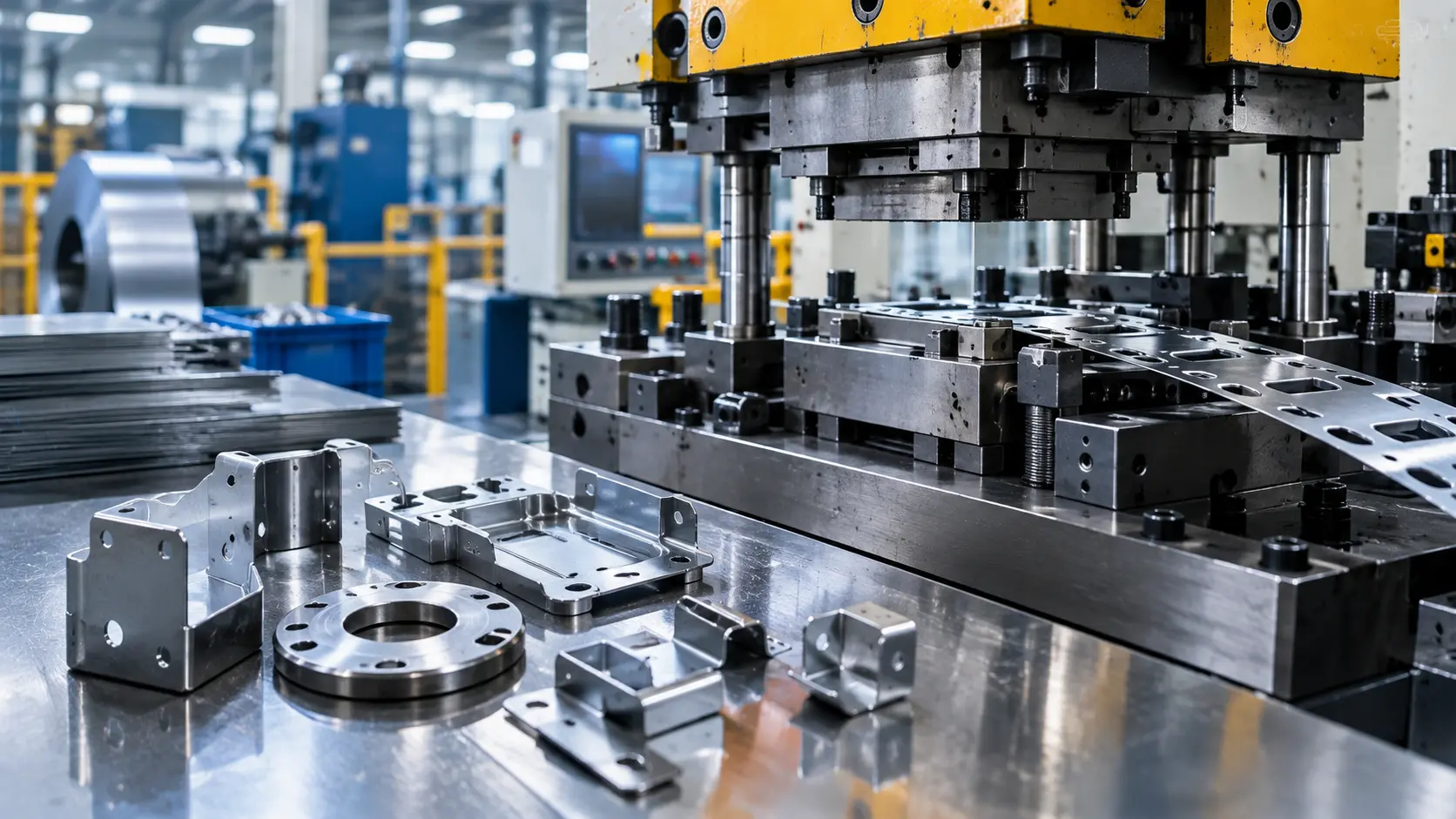
Metal stamping is one of the most efficient manufacturing processes for producing high-volume precision components. It is widely used in automotive systems, industrial equipment, electric motors, electronics, appliances, and automation machinery. However, even well-designed stamping operations can experience quality issues that affect dimensional accuracy, surface finish, mechanical performance, and production efficiency.
Understanding common metal stamping defects and their causes is essential for improving product quality and reducing manufacturing costs. This article explains the most common defects in metal stamping and practical solutions for preventing them.
1. Burrs
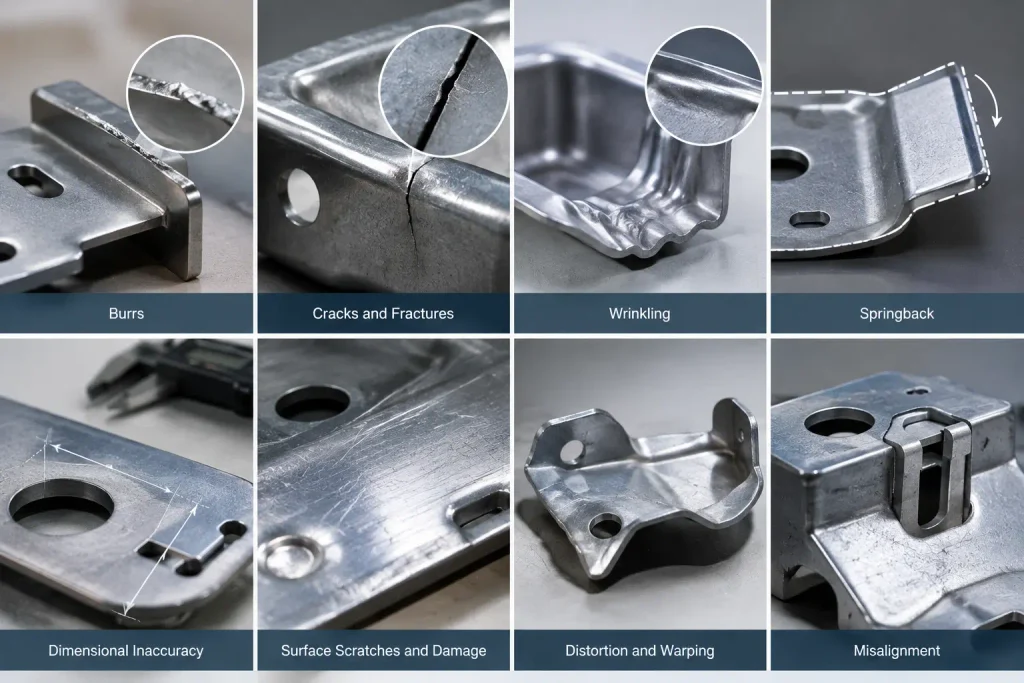
Burrs are unwanted sharp edges or excess material that remain on a stamped part after cutting or punching. They are among the most common defects in metal stamping.
Excessive burrs can create safety concerns, interfere with assembly, and affect the appearance and functionality of the finished component.
Common Causes
- Worn or damaged punching tools
- Incorrect punch and die clearance
- Improper tool alignment
- Poor material quality
- Excessive tool wear
Solutions
Maintaining the correct clearance between the punch and die is essential. Regular tool inspection and sharpening can significantly reduce burr formation. Manufacturers should also monitor tool alignment and replace damaged tooling when necessary.
For precision components, secondary deburring processes may also be required to achieve specific surface quality requirements.
2. Cracks and Fractures
Cracks can occur when the material is subjected to excessive stress during forming, bending, or deep drawing. In severe cases, the stamped part may fracture completely.
This defect is particularly common when working with materials that have limited ductility or when the forming process exceeds the material’s allowable deformation range.
Common Causes
- Excessive forming force
- Small bending radii
- Incorrect material selection
- Poor material ductility
- Improper lubrication
- Excessive stretching during forming
Solutions
The forming process should be designed according to the mechanical properties of the selected material. Increasing the bending radius can reduce stress concentration, while proper lubrication helps minimize friction during forming.
Material selection is also important. Engineers should consider tensile strength, elongation, hardness, and formability before finalizing the stamping process.
3. Wrinkling
Wrinkling occurs when excess material compresses and forms unwanted waves or folds during stamping or deep drawing.
This defect can affect both the appearance and dimensional accuracy of the finished component.
Common Causes
- Insufficient blank holder force
- Excessive material flow
- Improper die design
- Uneven material distribution
- Incorrect forming parameters
Solutions
Optimizing blank holder pressure can help control material flow during forming. Tooling design should also ensure that material is distributed evenly throughout the forming process.
Simulation and prototype testing can help engineers identify potential wrinkling problems before mass production begins.
4. Springback
Springback occurs when a metal part partially returns toward its original shape after forming. This is a common challenge in bending and forming operations.
Although springback is a natural material behavior, excessive springback can cause dimensional inaccuracies and assembly problems.
Common Causes
- High material strength
- Large elastic recovery
- Inadequate forming force
- Incorrect bending angle
- Improper tooling design
Solutions
Tooling can be designed to compensate for expected springback by slightly over-bending the material. Material properties should also be considered during the design stage.
Advanced simulation software can predict springback and help optimize tooling geometry before production.
5. Dimensional Inaccuracy
Precision metal stamping requires consistent dimensional control. Variations in part dimensions can lead to assembly problems, reduced performance, and higher rejection rates.
Common Causes
- Tool wear
- Improper die alignment
- Material thickness variation
- Inconsistent press performance
- Incorrect process parameters
Solutions
Regular inspection and preventive maintenance are essential for maintaining dimensional accuracy. Precision tooling and stable production equipment also play an important role.
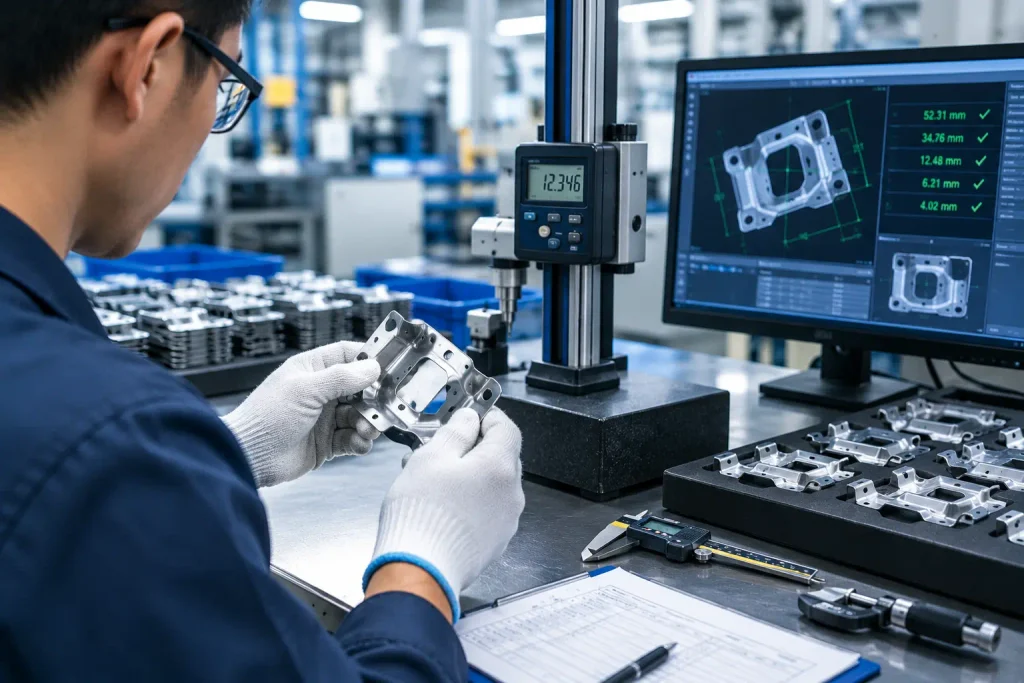
Quality control systems should include in-process inspections and dimensional measurement using appropriate equipment, such as calipers, gauges, optical measurement systems, or coordinate measuring machines.
6. Surface Scratches and Damage
Surface defects can occur when the material comes into contact with damaged tooling, foreign particles, or rough surfaces during production.
Scratches may be unacceptable for components that require a high-quality appearance or specialized surface treatments.
Common Causes
- Damaged tooling surfaces
- Contamination
- Improper material handling
- Inadequate lubrication
- Contact between stamped parts
Solutions
Keeping tooling and production areas clean helps prevent contamination-related defects. Tool surfaces should be inspected regularly for damage or excessive wear.
Proper material handling and protective packaging can also reduce surface damage during production and transportation.
7. Distortion and Warping
Distortion occurs when a stamped component does not maintain its intended shape after processing. This can result in poor flatness or uneven geometry.
Common Causes
- Uneven forming stress
- Residual stress in the material
- Improper die design
- Uneven material thickness
- Incorrect forming sequence
Solutions
Optimizing the forming sequence can help distribute stress more evenly. Tooling should also be designed to provide consistent support throughout the stamping process.
Material properties and residual stress should be evaluated during product development, particularly for precision components with tight tolerances.
8. Misalignment
Misalignment can occur when the punch, die, or material is not correctly positioned during the stamping process.
This may result in incorrectly located holes, uneven edges, or inconsistent part geometry.
Common Causes
- Improper tooling setup
- Worn guide components
- Incorrect material positioning
- Equipment vibration
- Tooling damage
Solutions
Precision guide systems and properly maintained tooling are essential for preventing misalignment. Automated feeding systems can also improve material positioning and consistency.
Regular equipment calibration and production monitoring help identify alignment problems before they affect a large production batch.
How to Prevent Metal Stamping Defects
Preventing defects requires a systematic approach that combines engineering, tooling, materials, process control, and quality inspection.
Key strategies include:
- Selecting suitable materials
- Optimizing part design for manufacturability
- Using precision stamping dies
- Maintaining correct punch and die clearance
- Performing regular tooling maintenance
- Controlling lubrication and material flow
- Monitoring production parameters
- Conducting in-process inspections
- Using prototype testing before mass production
Early engineering involvement is particularly important. Identifying potential manufacturing challenges during the design stage can reduce tooling modifications and prevent costly production problems.
The Importance of Tooling and Quality Control
High-quality tooling is one of the most important factors in precision metal stamping. Even a well-designed part can experience defects if the stamping die is worn, incorrectly aligned, or poorly maintained.
At the same time, quality control should not be limited to final inspection. Effective manufacturers integrate inspection throughout the production process.
A comprehensive quality management system may include:
- Incoming material inspection
- First article inspection
- In-process quality checks
- Dimensional measurement
- Surface inspection
- Functional testing
- Final inspection
This approach helps identify defects early and reduces the risk of defective components reaching customers.
Why Work with an Experienced Metal Stamping Manufacturer?
Selecting an experienced manufacturing partner can help OEMs reduce quality risks and improve production efficiency.
A capable precision metal stamping manufacturer should provide support in:
- Engineering drawing review
- Design for manufacturability
- Material selection
- Tooling development
- Prototype production
- Progressive stamping
- Precision inspection
- Quality documentation
- OEM manufacturing
At HS Hardwares, we provide precision metal stamping and custom manufacturing solutions for industrial applications. Our team works with customers from drawing review and material selection to tooling development, production, quality inspection, and delivery.
By combining manufacturing experience with process control and quality management, we help customers achieve consistent product quality and reliable production performance.
Conclusion
Metal stamping defects can affect product quality, manufacturing efficiency, and overall production costs. Common issues such as burrs, cracks, wrinkling, springback, dimensional inaccuracies, scratches, distortion, and misalignment often result from a combination of tooling, material, and process-related factors.
The most effective solution is not simply correcting defects after production. A proactive manufacturing strategy focused on proper design, material selection, precision tooling, process optimization, and continuous quality control can prevent many problems before they occur.
For OEM manufacturers requiring reliable and high-quality stamped components, working with an experienced precision metal stamping supplier can improve consistency, reduce waste, and support long-term production success.
Leave a Reply