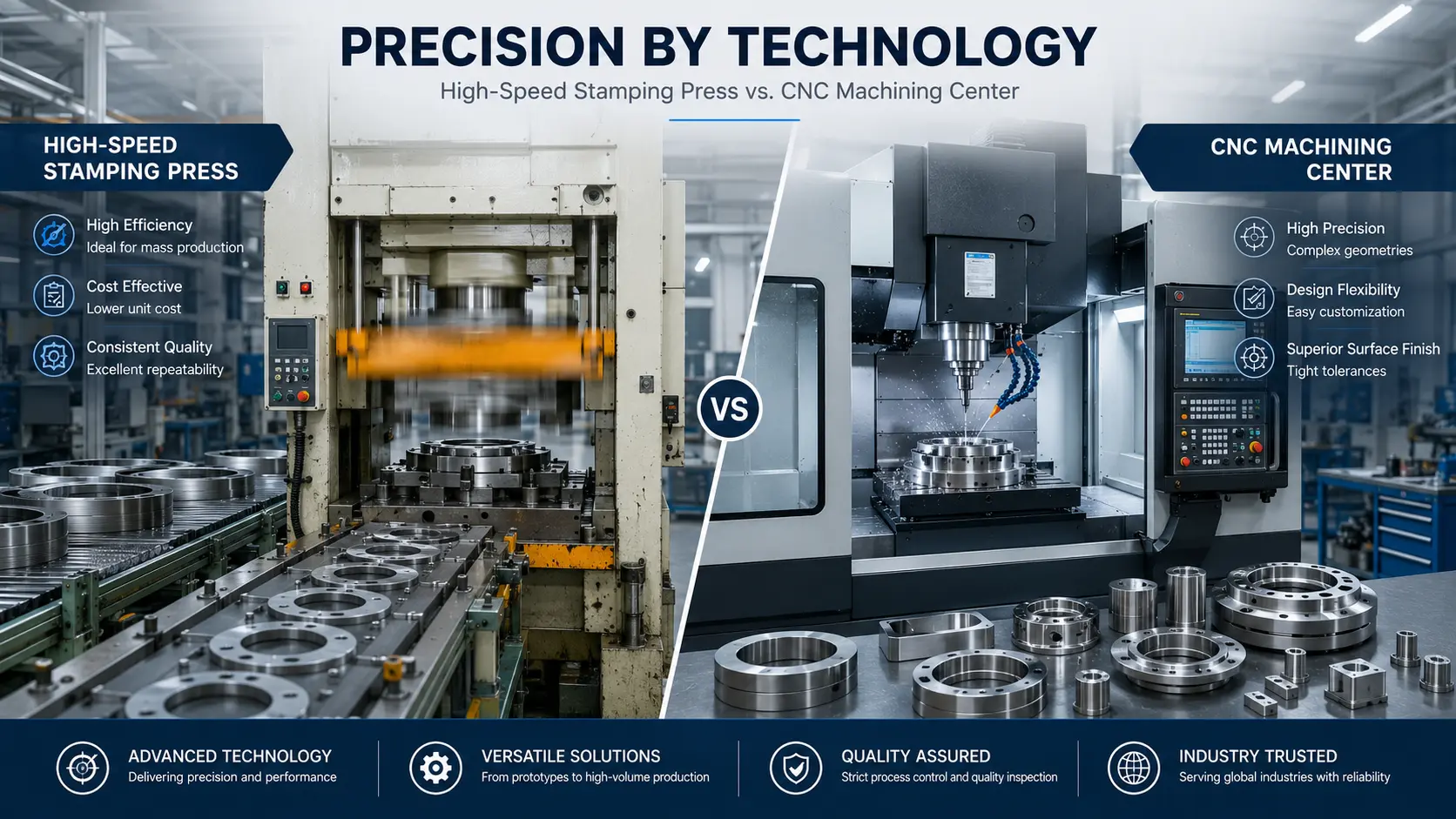
When manufacturing metal components, two of the most common production methods are precision stamping and CNC machining. Both processes are widely used across industries such as automotive, electronics, aerospace, medical devices, and industrial equipment. However, each method offers distinct advantages depending on production volume, part complexity, cost requirements, and material specifications.
Understanding the differences between precision stamping and CNC machining can help manufacturers choose the most efficient and cost-effective solution for their projects.
What Is Precision Stamping?
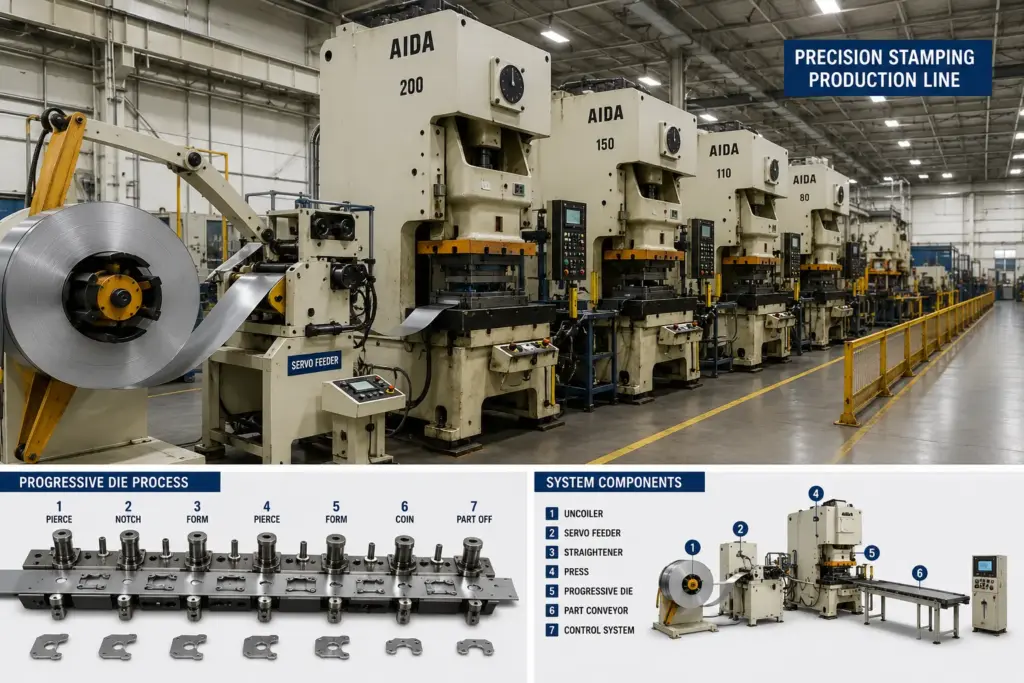
Precision stamping is a manufacturing process that uses custom dies and high-speed presses to cut, bend, form, or shape sheet metal into finished components.
The process is highly automated and ideal for producing large quantities of identical parts with exceptional consistency. Once the tooling is developed, stamping can manufacture thousands or even millions of components with minimal variation.
Common precision stamped products include:
- Electrical terminals
- Metal brackets
- Motor laminations
- Battery contacts
- Electronic shielding components
What Is CNC Machining?
CNC machining is a subtractive manufacturing process that removes material from a metal block or workpiece using computer-controlled cutting tools.
This method offers excellent flexibility and can produce highly complex geometries with tight tolerances. CNC machining is commonly used for prototypes, custom parts, and low-to-medium production volumes.
Typical CNC machined products include:
- Precision housings
- Mechanical components
- Aerospace parts
- Medical device components
- Custom prototypes
Key Differences Between Precision Stamping and CNC Machining
Production Volume
Precision stamping is most economical for high-volume production. Although tooling costs can be significant, the cost per part decreases dramatically as production quantities increase.
CNC machining requires little to no dedicated tooling, making it ideal for low-volume production and rapid prototyping.
Cost Efficiency
For large production runs, precision stamping generally offers a lower unit cost due to high-speed automation and material efficiency.
CNC machining typically has higher labor and machine time costs, especially for complex parts requiring multiple operations.
Part Complexity
CNC machining can create intricate three-dimensional features, pockets, threads, and complex contours that may be difficult or impossible to achieve through stamping.
Precision stamping is best suited for components made from sheet metal with relatively consistent thickness.
Material Utilization
Precision stamping often generates less material waste when producing high volumes of sheet metal components.
CNC machining removes material during the cutting process, which can result in higher material consumption.
Which Process Should You Choose?
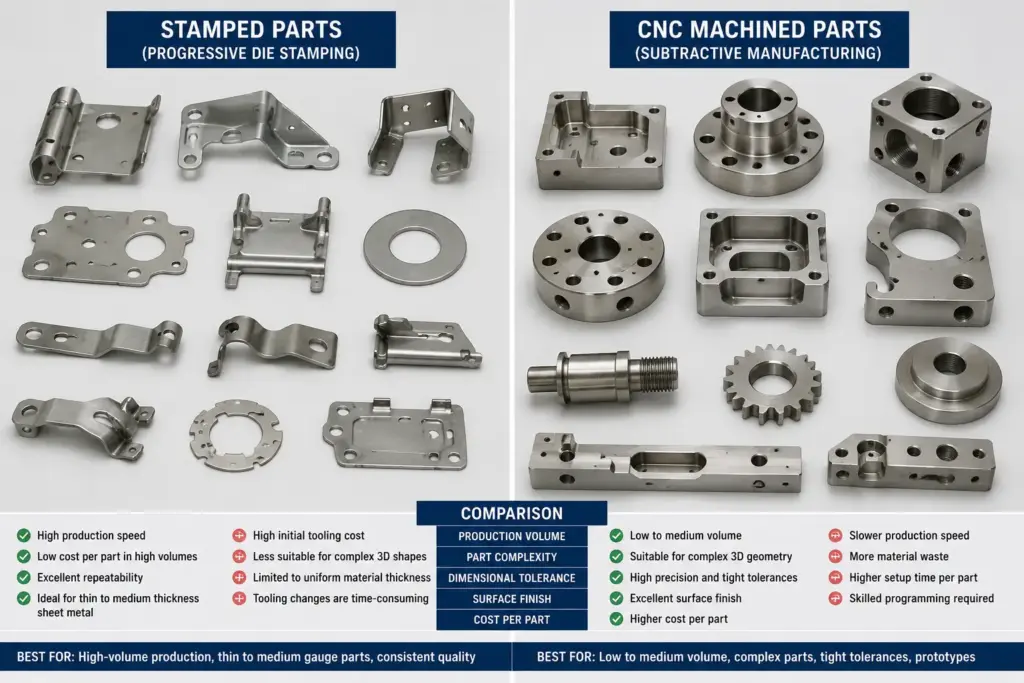
The best manufacturing method depends on your project requirements.
Choose precision stamping if you need:
- High-volume production
- Lower cost per part
- Excellent repeatability
- Fast production speeds
Choose CNC machining if you need:
- Complex geometries
- Prototype development
- Low-volume production
- Design flexibility
In many cases, manufacturers use both processes during different stages of product development, starting with CNC prototypes and transitioning to precision stamping for mass production.
Conclusion
Both precision stamping and CNC machining play essential roles in modern manufacturing. Precision stamping excels in high-volume, cost-sensitive production, while CNC machining provides unmatched flexibility and precision for complex parts. By evaluating production volume, design requirements, budget, and lead times, manufacturers can select the process that delivers the best balance of quality, efficiency, and cost.
At HS Hardwares, we provide precision stamping parts and custom manufacturing solutions to help customers optimize performance, reduce costs, and accelerate product development.
Leave a Reply