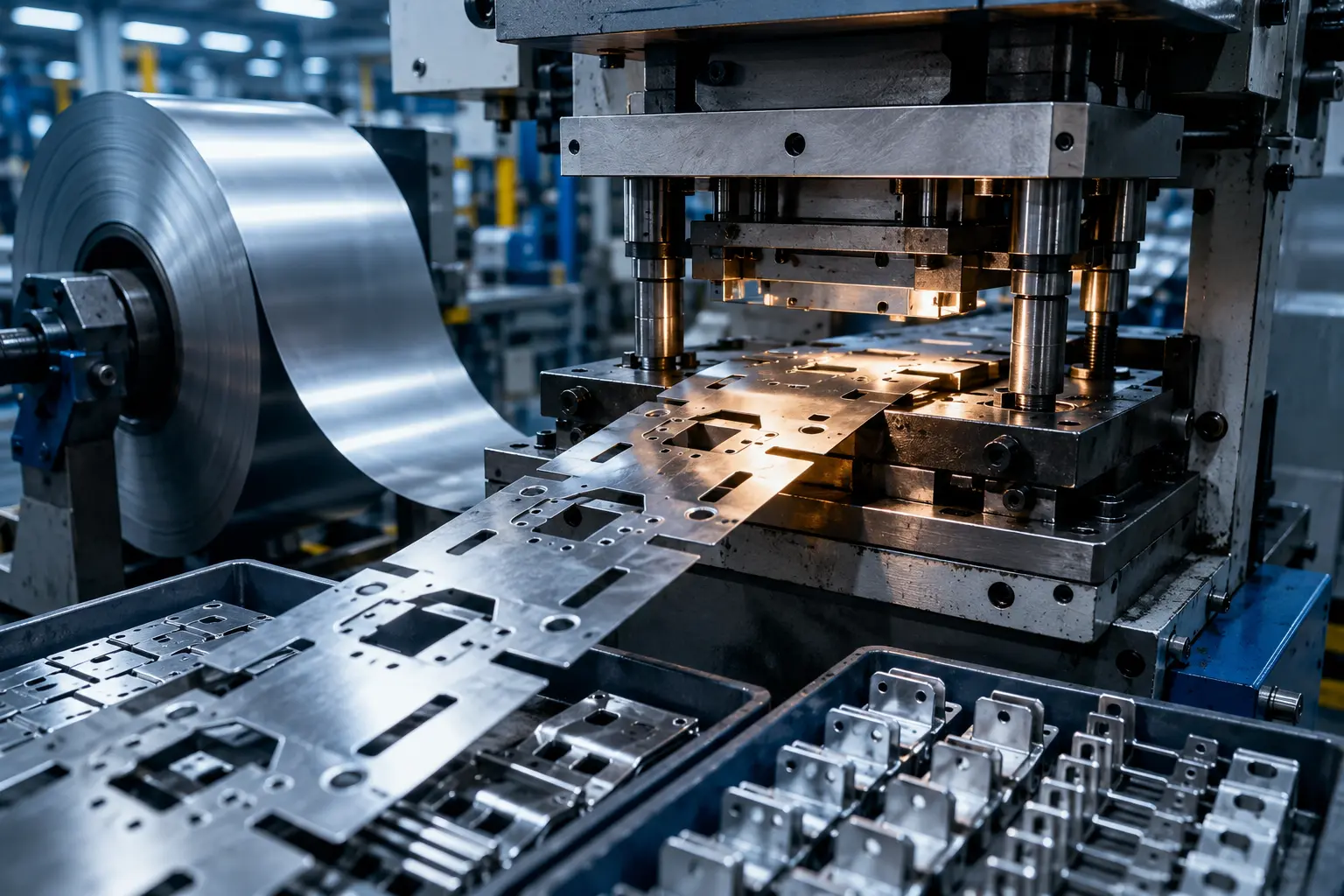
Precision metal stamping is a highly efficient manufacturing process used to produce complex metal components with exceptional accuracy, consistency, and repeatability. By using specialized dies and stamping presses, manufacturers can transform flat metal sheets into precise parts that meet strict dimensional tolerances and quality requirements. This process is widely used across industries such as automotive, electronics, aerospace, medical devices, renewable energy, and industrial equipment.
How Precision Metal Stamping Works
The precision metal stamping process begins with a metal sheet or coil being fed into a stamping press. A custom-designed die applies controlled force to cut, shape, bend, or form the material into the desired geometry. Depending on the application, several operations may be performed in a single production cycle, including:
- Blanking
- Piercing
- Bending
- Coining
- Deep drawing
- Embossing
Advanced stamping equipment can produce thousands of identical components per hour while maintaining tight tolerances, making it one of the most cost-effective solutions for high-volume production.
Materials Used in Precision Stamping
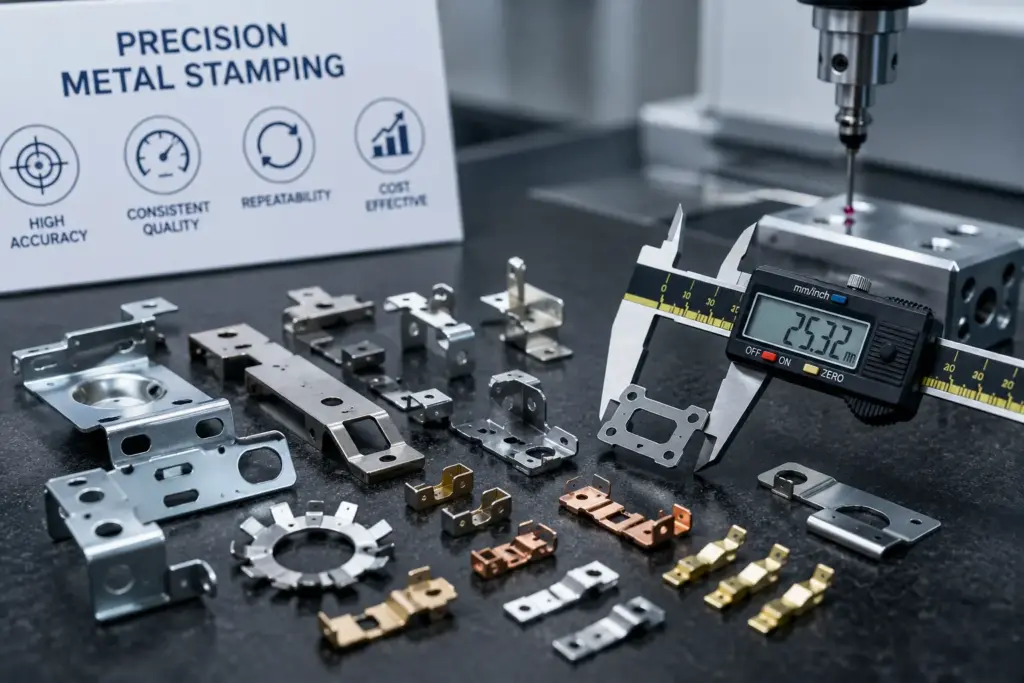
Precision metal stamping can be performed on a wide range of materials to meet different performance requirements. Common materials include:
- Stainless steel
- Carbon steel
- Aluminum
- Copper
- Brass
- Nickel alloys
- Spring steel
Material selection depends on factors such as strength, corrosion resistance, conductivity, weight, and operating environment.
Key Advantages of Precision Metal Stamping
High Accuracy
Modern stamping technology enables manufacturers to achieve extremely tight tolerances and consistent part dimensions, ensuring reliable performance in critical applications.
Cost Efficiency
Once tooling is developed, precision stamping offers a low cost per part, especially for medium- to high-volume production runs.
Fast Production Speed
Automated stamping systems can manufacture large quantities of components quickly, reducing lead times and improving supply chain efficiency.
Excellent Repeatability
Precision stamping delivers uniform quality across every production batch, minimizing variation and reducing waste.
Material Utilization
Optimized die designs help maximize material usage and reduce scrap, contributing to lower manufacturing costs.
Applications of Precision Metal Stamping
Precision stamped parts can be found in countless products and systems. Typical applications include:
- Electrical terminals and connectors
- Motor laminations
- Battery contacts
- Automotive brackets and clips
- Medical device components
- Electronic shielding parts
- Appliance hardware
- Industrial fasteners
As products become smaller, lighter, and more sophisticated, the demand for precision stamped components continues to grow.
Choosing a Precision Metal Stamping Partner
Selecting an experienced precision metal stamping manufacturer is essential for achieving consistent quality and reliable delivery. Important factors to consider include engineering expertise, tooling capabilities, quality control systems, material sourcing, and customization support.
A qualified stamping supplier can assist from design optimization through mass production, helping reduce costs while ensuring product performance and manufacturability.
Conclusion
Precision metal stamping is a versatile and highly efficient manufacturing process that produces accurate, durable, and cost-effective metal components. With its ability to support high-volume production while maintaining strict quality standards, precision stamping remains a critical technology for modern industries. Companies seeking reliable metal parts often rely on precision stamping solutions to improve product quality, reduce manufacturing costs, and accelerate time to market.
Leave a Reply